A pan-tilt positioner is built from approved drawings, inspected components, and a controlled assembly process. Its precision depends on how the mechanical parts, feedback and controller work together. Before accepting a unit, check that its serial number connects to the configuration tested, the measured results, and the release decision.
Define the Build Before Machining
The engineering team needs the payload mass, center of gravity, mounting interface, required movement, electrical connections and operating environment. These inputs determine the structure, drive arrangement, cable paths, and inspection priorities. The manufacturing route varies with the design.
Freeze the drawings, parts list and interface requirements before production. A later housing change can alter balance or cable clearance. The payload integration guide explains those inputs. For critical infrastructure security projects, include the installation and control-system interfaces in the same review.
Set acceptance limits during this review. The inspection team needs to know which dimensions, movements and interfaces must pass, and whether the required evidence covers a prototype, a pilot build or every production unit.
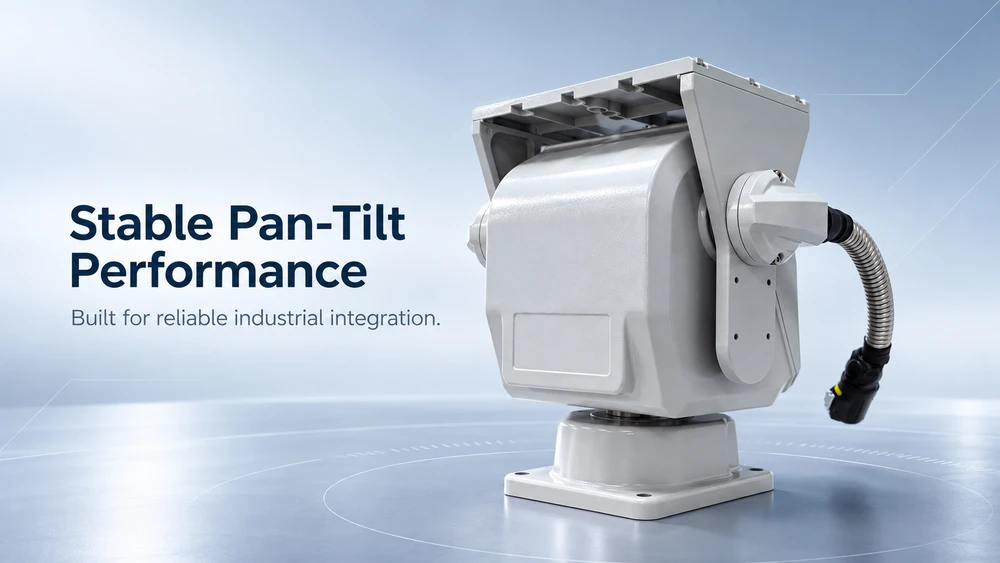
Inspect the Features That Set Alignment
Depending on the design, housings and shafts may be machined from stock, castings or fabricated parts. Bearings, motors, seals and electronics may come from specialist suppliers.
Pay attention to bearing seats, shaft shoulders, mounting faces and the features locating each axis. Measure them against the drawing’s datums: the reference surfaces or axes that define their position. The inspection plan should specify the characteristic, tolerance, method and equipment.
Keep actual readings where the plan requires them. “Dimensions checked” cannot explain a later fit problem. Use equipment suitable for the feature and tolerance, and identify it in the record.
Incoming checks should cover part identity, revision, condition and required certificates. Where an outsourced coating affects a fit, specify the check after coating. Retain relevant lot references so suspect parts can be traced to assembled units.
For outsourced parts, state the required records in the purchase specification. A material or coating certificate may cover a batch; the assembly record should connect that batch to the relevant units. Record and review exceptions before assembly.
Check Assembly Through the Full Travel
Assembly brings the bearings, shafts, drive and housing together. Geared designs may need specified mesh or preload adjustments; direct-drive arrangements have their own alignment and feedback requirements. Use the approved instruction for that build.
Control fastener tightening, lubrication, bearing installation and seal placement. Then move the assembly through its intended travel. Watch the cables. A neat cable loop at home can pull against a connector near the end of travel.
Record the instruction revision, important parts or lots, completed checks and any unplanned adjustment. Include the operator and completion date for each designated assembly check. If a technician has to alter the assembly to make it move freely, review that change before continuing.
Verify Wiring, Commands and Firmware
Check connector assignments, supply polarity, protective connections and feedback direction against the wiring plan. Verify the configured limits and home behavior where applicable.
Run the commands the customer will use. Confirm that position feedback uses the agreed units and direction. If signals pass through moving joints, test them during movement; continuity alone does not prove that a data connection works.
Save the controller identity, firmware version and released parameter file with the unit record. Any tuning change made during final testing must appear in the delivered configuration.
Separate Calibration from Function Checks
The pan-tilt positioner manufacturing process needs distinct checks:
- Dimensional inspection: designated physical features meet the drawing.
- Calibration: indications are compared with a reference under stated conditions. Adjustment is a separate operation.
- Functional verification: the assembled unit performs the ordered actions within agreed limits.
A positioning report should identify the unit, load, fixture, approach direction, reference, software configuration and acceptance rule. Keep the raw readings. The positioning accuracy test guide covers repeatability, backlash and settling methods.
NIST explains measurement traceability as a documented chain to a reference, with uncertainty accounted for. It belongs to the measurement result; an instrument’s calibration sticker supplies only part of the evidence.
Read the test conditions before comparing results. A different fixture, payload or reference uncertainty can change how an angular measurement should be interpreted. The report should contain enough detail for an engineer to understand those differences.
Separate environmental qualification from routine production checks too. Establish which test covers the delivered enclosure and connectors, and which checks apply to each unit.

Keep Rework Visible at Release
When a unit fails, is adjusted and passes again, retain both results. Link the fault, authorized action and retest to the serial number.
Retest what the work could affect. A cable-routing change may call for travel and signal checks; a replacement drive may require motion and positioning checks. Engineering should define that scope.
A repair that departs from the approved design needs the appropriate engineering or customer decision. The release record should identify who accepted the change and whether its consequences were reviewed for other units already built.
Use this suggested review sheet when checking the release package:
| Record | Check before acceptance |
|---|---|
| Requirement and revision | The drawing and acceptance criteria match the order. |
| Serial number and lot | The records cover the delivered unit and relevant parts. |
| Original results | Measurements identify the setup, conditions and reference. |
| Rework and retest | Changes have authorization and appropriate follow-up results. |
| Release | The final configuration and approving person are identified. |
For a prototype, record temporary parts and unresolved limitations. At pilot review, check that approved changes reached the drawings and work instructions. Production release should use the agreed unit records and change-notification rules.
ISO’s guidance on documented information allows documentation to reflect process complexity. The form matters less than whether it preserves the evidence needed for review.
Match the Review to Your Payload
Apply these checks across the pan-tilt positioner range, adjusting the scope for payload balance, inertia, interfaces and duty.
Review the industrial pan-tilt unit and heavy-duty pan-tilt unit with your payload drawing. Ask JEC to confirm the exact variant, specification and available inspection records. Include any additional evidence your quality team requires in the RFQ.
The inspection scope should follow the complete assembly. Include the center of gravity, mounting arrangement, cable paths and operating environment in the review, so the factory checks address the conditions your project will actually require.
FAQ
Which records should accompany a positioner?
Agree the package when ordering: configuration, serial number, inspection and test results, firmware, deviations and release authorization.
Is a final inspection certificate enough?
It summarizes acceptance. Check the criteria, conditions and underlying records before relying on its pass statement.
What belongs in a calibration record?
The measured quantity, method, reference, setup, results, relevant uncertainty and configuration. Retain before-and-after results when adjustments occur.
What should be repeated after rework?
Checks covering the functions the change could affect. Record the engineering decision and the retest results.
Can buyers review quality without proprietary drawings?
Agree a redacted package or witnessed review covering revisions, criteria, results and disposition. Set access and retention terms beforehand.