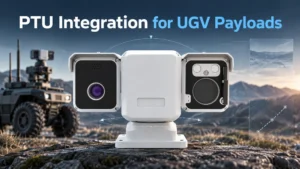
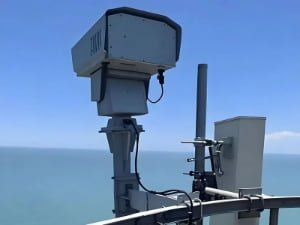
A thermal PTZ camera RFQ should not only ask for price. It should explain the project scene, target type, required observation task, thermal lens, visible zoom, PTZ movement, mounting environment, system integration requirements, documentation needs, quantity, timeline, and any OEM/ODM customization.
For security integrators and project buyers, a clearer RFQ usually leads to a more realistic configuration recommendation.
Introduction
Many project inquiries start with a short sentence: “Please quote a long range thermal PTZ camera.” That is understandable, but it is rarely enough for accurate model selection. A thermal PTZ camera used for a factory perimeter may need a different lens, housing, and integration workflow from one used for a coastal station, airport perimeter, border post, oil and gas site, or anti-drone visual verification system.
Before sending an RFQ, buyers should prepare the technical context. That helps the supplier recommend a project-based configuration instead of quoting a generic model.
Recommended video insert here:
Start With the Application Scenario
The first thing to clarify is where the thermal PTZ camera will be installed.
Typical B2B scenarios include:
- Industrial perimeter security
- Border and coastal observation
- Airport perimeter monitoring
- Power substation security
- Oil and gas facility surveillance
- Forest fire detection support
- Mobile or temporary surveillance
- Anti-drone visual confirmation
- OEM/ODM integration into a larger platform
For example, a coastal project may need stronger outdoor protection. An anti-drone project may need faster PTZ response. A substation project may focus on stable 24/7 monitoring and alarm linkage.
For product-category reference, buyers can review JEC’s thermal PTZ camera systems.
Define the Target Type
A good RFQ should say what the camera needs to observe.
Common target types include people, vehicles, vessels, equipment, perimeter movement, suspicious low-altitude objects, smoke, or abnormal heat sources.
It is also useful to explain the observation task:
- Detection
- Recognition
- Identification
- Tracking
- Operator verification
- Alarm confirmation
These are not the same. A project that only needs early detection may use a different configuration from one that requires visible confirmation at longer distances.
Be Careful With Distance Claims
Buyers often ask for a fixed detection range. That is normal, but it should be handled carefully.
A long range thermal PTZ camera does not perform based on distance alone. Real performance depends on target size, lens focal length, thermal resolution, weather, mounting height, installation angle, image processing, and the buyer’s own performance criteria.
Instead of asking only for “5 km detection,” provide the target size, expected distance range, site layout, mounting height, and operating environment. This gives the supplier a better basis for recommendation.
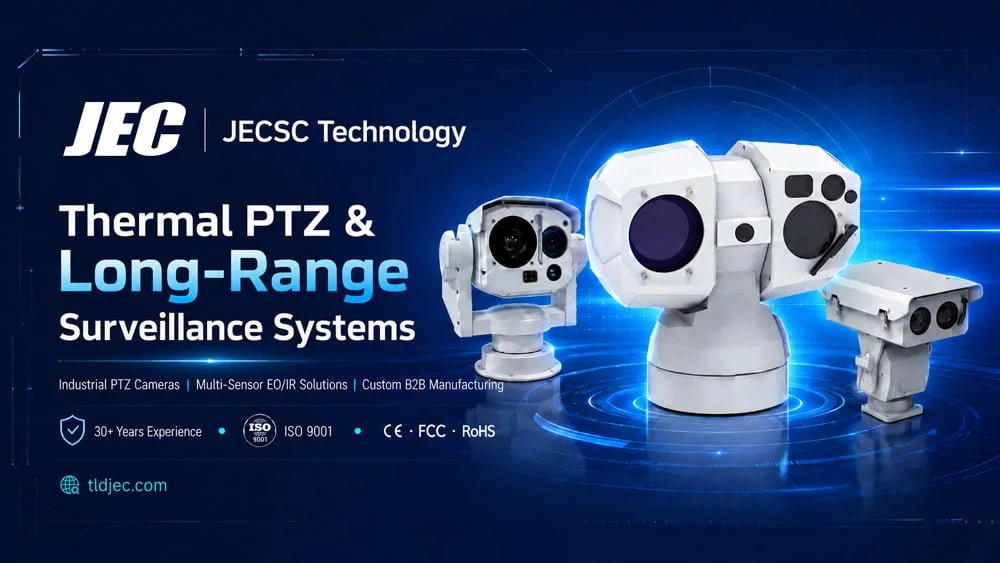
For wider project comparison, JEC’s long range surveillance camera category can be used as a product reference.
Confirm Thermal Imaging Requirements
Thermal imaging is useful for low light, night operation, smoke, haze, and other low-visibility environments. But the correct thermal configuration depends on the application.
Your RFQ should include:
- Preferred thermal resolution, if known
- Thermal lens requirement
- Expected field of view
- Target type and target size
- Whether the camera must scan wide areas
- Whether the camera must focus on long-distance observation
- Expected weather and visibility conditions
A wider thermal lens supports broader scene awareness. A longer focal length supports narrower, longer-distance observation. The right choice depends on the project.
Confirm Visible Zoom Requirements
Many professional systems are EO/IR PTZ camera configurations. They combine thermal imaging with a visible zoom camera.
Thermal imaging helps operators find heat signatures. Visible imaging helps with visual confirmation when lighting and weather allow.
Your RFQ should mention:
- Visible camera resolution
- Optical zoom requirement
- Low-light expectations
- Whether IR illumination is needed
- Whether images will be used for operator review or evidence capture
- Whether the video will be sent to a VMS or command center
A high zoom number alone is not enough. Mounting stability, atmospheric conditions, vibration, and field of view also matter.
Specify PTZ Movement and Alarm Response
PTZ movement affects how quickly a camera can reposition after an alarm.
Include these details:
- Pan range
- Tilt range
- Pan and tilt speed
- Preset accuracy
- Patrol route requirements
- Auto-tracking requirements
- Alarm-to-preset workflow
- Manual VMS control requirements
For general perimeter monitoring, stable presets may matter more than maximum speed. For anti-drone or fast-moving targets, faster response may be more important.
Confirm Integration Requirements
A thermal PTZ camera is usually part of a larger security system. It may need to work with VMS software, radar, perimeter alarms, access control, or command center platforms.
Your RFQ should confirm:
- ONVIF
- RTSP
- PTZ control protocol
- SDK or API
- Alarm input/output
- VMS compatibility
- Radar or sensor integration
- Network security requirements
Ask for Documentation
For B2B procurement, documentation is part of the product.
Ask for:
- Datasheet
- Product drawing
- Interface description
- Installation guide
- User manual
- Protocol information
- Packing details
- Warranty terms
- Maintenance guidance
- Available compliance documents
This is especially important for distributors, OEM/ODM buyers, and project contractors who need to support local customers or tender documents.
Add OEM/ODM Requirements Early
If the project needs customization, mention it early.
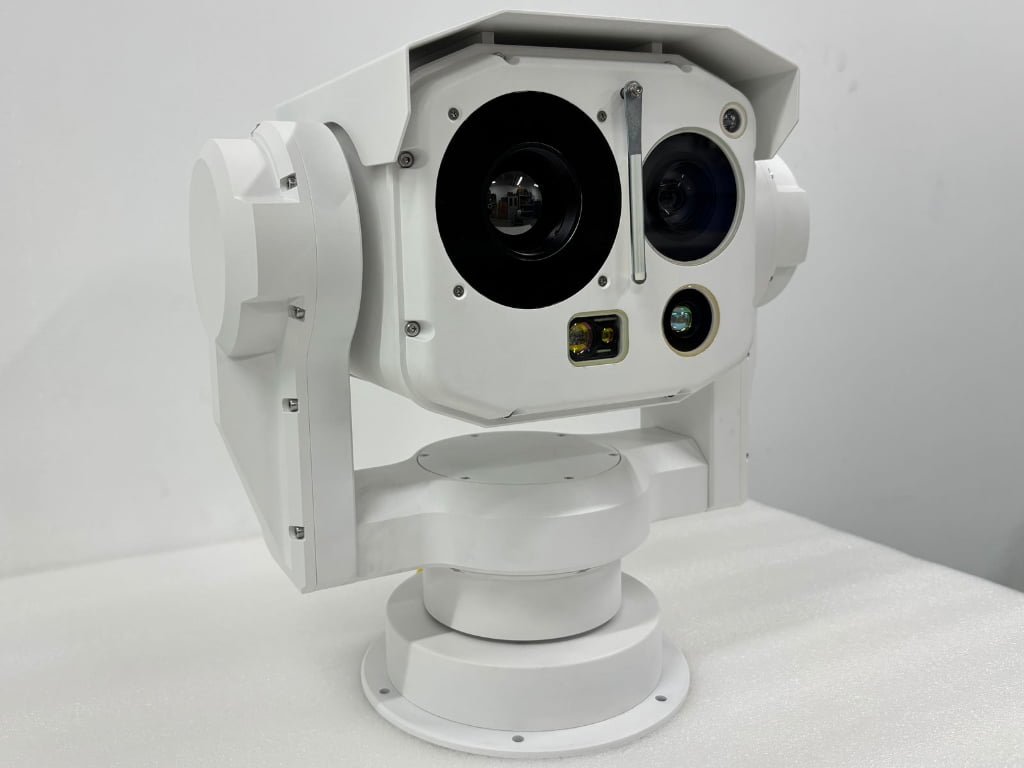
Common OEM/ODM items include:
- Housing design
- Thermal lens
- Visible camera module
- Firmware logic
- Protocol
- Connector type
- Mounting bracket
- Logo and color
- Packaging
- Private-label documentation
Early clarification helps the manufacturer evaluate feasibility, MOQ, lead time, and development cost.
Use a Clear RFQ Format
A practical RFQ can be written like this:
“Please recommend a thermal PTZ camera configuration for our perimeter security project. The camera will be installed outdoors on a pole. The system needs to observe human and vehicle movement at different distances, connect with our VMS, support ONVIF/RTSP, and provide datasheet, drawing, MOQ, lead time, and quotation. OEM branding may be required for batch orders.”
That is far more useful than a short request for “best price.”
RFQ Checklist
Before contacting a supplier, prepare:
- Project country or region
- Application scenario
- Target type
- Observation task
- Expected distance range
- Thermal lens requirement
- Visible zoom requirement
- PTZ speed and preset needs
- Mounting method
- Outdoor conditions
- VMS or platform requirements
- ONVIF / RTSP / SDK / API needs
- Quantity
- Timeline
- Documentation needs
- OEM/ODM requirements
JEC Product Fit
JEC supports B2B buyers with thermal PTZ camera, EO/IR PTZ, and long-range surveillance camera systems for industrial perimeter security, border observation, coastal monitoring, critical infrastructure protection, and project-based OEM/ODM applications.
For configuration support, buyers can request a project quote from JEC with site details, target type, integration needs, quantity, and customization requirements.
FAQ
What should I include in a thermal PTZ camera RFQ?
Include the project scenario, target type, observation task, thermal lens, visible zoom, PTZ movement, mounting environment, integration protocol, quantity, timeline, documentation needs, and OEM/ODM requirements.
Can a thermal PTZ camera guarantee a fixed detection range?
A fixed range should not be treated as a universal guarantee. Detection performance depends on target size, thermal lens, sensor resolution, weather, mounting height, and performance criteria.
What is the difference between thermal PTZ and EO/IR PTZ?
A thermal PTZ camera uses thermal imaging with pan-tilt movement. An EO/IR PTZ camera usually combines thermal imaging and visible zoom in one PTZ platform.
Why is ONVIF important for system integrators?
ONVIF can help IP cameras and software platforms communicate more easily, depending on the supported profile and implementation.
Can JEC support OEM/ODM thermal PTZ projects?
Yes. JEC can discuss housing, lens, visible camera module, firmware, protocol, branding, packaging, and batch delivery requirements based on the project.
CTA
Request a Project-Based Thermal PTZ Camera Configuration
Send JEC your project scenario, target type, expected observation task, installation environment, integration requirements, quantity, timeline, and OEM/ODM needs. JEC can review the requirements and recommend a suitable thermal PTZ camera or EO/IR PTZ configuration.