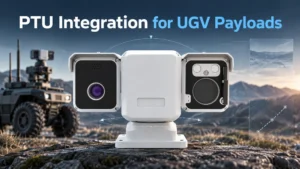
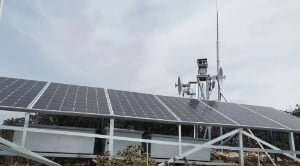
Direct answer: To evaluate a thermal PTZ camera manufacturer for OEM/ODM projects, buyers should review product focus, thermal and visible imaging integration, PTZ platform design, customization capability, protocol support, documentation quality, testing process, supply stability, and engineering communication. A suitable supplier should help define a project-based configuration, not simply send a standard price list.
For overseas distributors, security integrators, OEM/ODM buyers, and project contractors, choosing a thermal PTZ supplier is not a routine purchasing task. The camera may become part of a perimeter security system, coastal observation network, mobile surveillance platform, anti-drone visual verification system, or critical infrastructure project. Once the wrong platform is selected, the cost is not limited to the camera price. It can affect integration time, site acceptance, maintenance, and long-term customer confidence.
This guide explains how B2B buyers can evaluate an OEM thermal PTZ camera supplier before sample ordering, private-label cooperation, or project-based procurement.
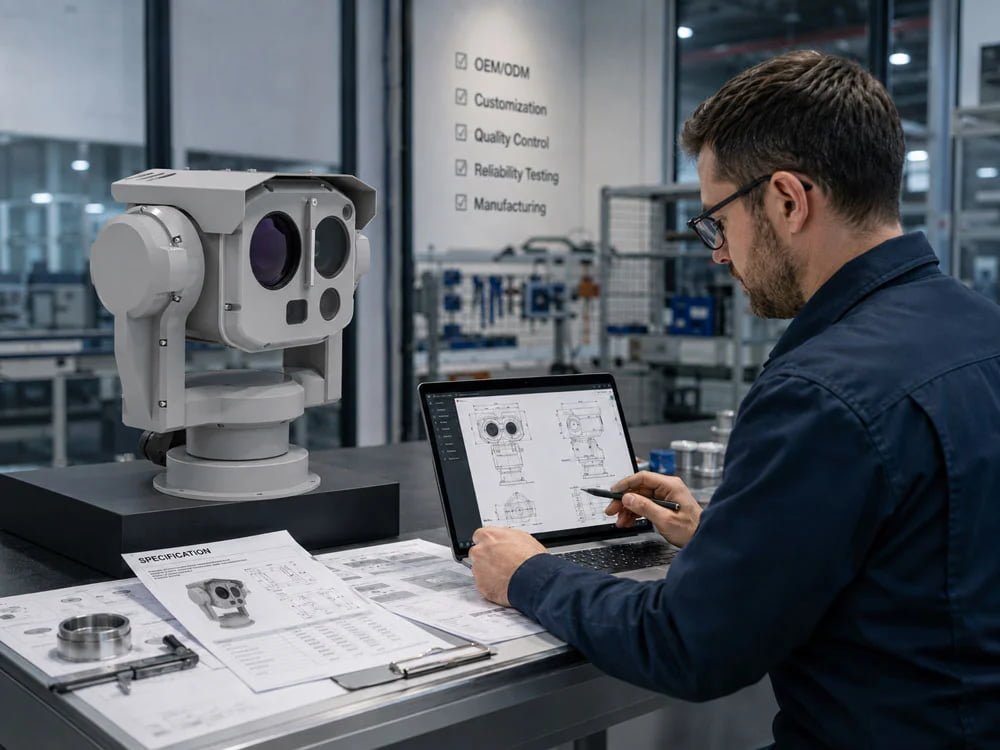
Start With Product Focus, Not Only Company Size
A large electronics supplier is not automatically the right partner for thermal PTZ projects. OEM/ODM buyers should first ask whether the manufacturer has a clear product focus in professional surveillance, PTZ platforms, thermal imaging, EO/IR integration, and outdoor project deployment.
For B2B surveillance projects, the supplier should understand terms such as thermal lens selection, visible zoom confirmation, pan-tilt stability, preset control, multi-sensor payloads, VMS integration, and field installation constraints. These are not typical consumer camera questions.
Useful questions to ask:
- Does the supplier focus on industrial PTZ and thermal imaging systems?
- Can the supplier explain the difference between fixed thermal cameras, thermal PTZ cameras, and EO/IR PTZ systems?
- Does the supplier understand perimeter, border, coastal, industrial, and mobile surveillance use cases?
- Can the supplier recommend a configuration based on target type and site environment?
- Can the supplier support OEM/ODM discussion beyond logo printing?
A capable PTZ camera manufacturer should be comfortable discussing both mechanical design and imaging workflow. If the conversation stays at “best price” and “standard model only,” the supplier may not be suitable for project-based cooperation.
Evaluate Thermal and Visible Imaging Integration
Many professional systems combine a thermal channel and a visible zoom camera. Thermal imaging helps operators observe heat signatures in darkness or low-visibility environments, while visible imaging supports visual confirmation when conditions allow.
Before choosing a thermal PTZ camera supplier, buyers should understand how the supplier handles thermal-visible integration. Do not evaluate the thermal module, visible camera, and PTZ platform as isolated parts. In the field, they must work together as one operational system.
Questions for the supplier
- What thermal resolution options are available for the intended project type?
- What thermal lens options can be considered for the expected observation zone?
- What visible zoom camera options are suitable for visual confirmation?
- Can the supplier recommend thermal lens and visible zoom based on target type, observation zone, and installation height?
- How can thermal and visible channels be accessed by the buyer’s VMS or control platform?
- Can optional payloads such as laser rangefinder, GPS, or other modules be evaluated according to project requirements?
For long-range surveillance projects, avoid relying on a single advertised distance claim. Real performance depends on target size, lens selection, sensor configuration, weather, installation height, image quality, and the project’s definition of detection, recognition, or identification.
Review PTZ Platform Design and Motion Control
The PTZ platform is the mechanical foundation of the system. Even a strong camera module can perform poorly if the pan-tilt platform is unstable, slow to respond, difficult to mount, or unsuitable for the operating environment.
For OEM/ODM buyers, this section deserves serious attention because mechanical changes may affect tooling, lead time, cost, cable routing, payload balance, and long-term reliability.
Key PTZ platform checks
- Pan and tilt movement range required by the project
- Pan and tilt speed needed for the target scenario
- Preset accuracy and repeatability expectations
- Payload capacity and balance design
- Mounting options for pole, wall, tower, vehicle, robot, or marine platform
- Outdoor housing protection requirements
- Connector type and cable routing method
- Maintenance access and replacement parts policy
Ask for drawings or mechanical interface documents when the camera will be integrated into a vehicle, robot, tower structure, or private-label enclosure. A sample that works on a desk may still create problems if the bracket, connector, or cable exit direction does not match the final platform.
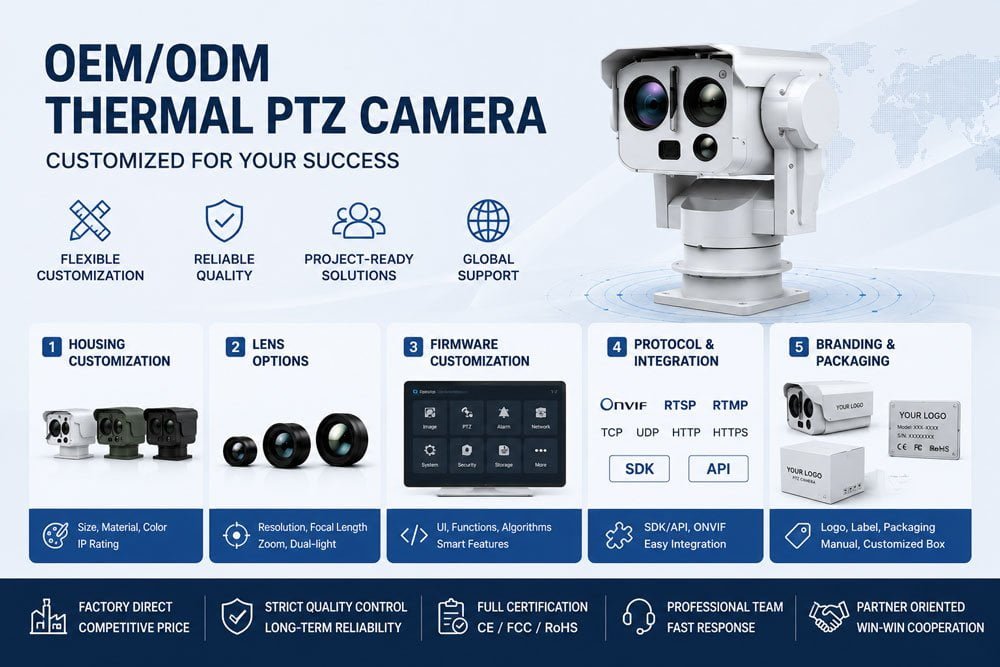
Check OEM/ODM Customization Depth
OEM/ODM cooperation should not be limited to changing the logo. For professional thermal PTZ projects, customization may involve imaging configuration, housing, interface, firmware behavior, communication protocol, mounting structure, packaging, and documentation.
Common customization discussion areas include:
- Housing color and logo placement
- Thermal lens selection
- Visible camera module selection
- Pan-tilt payload configuration
- Connector and cable interface
- Mounting bracket
- Firmware behavior required by the project workflow
- Protocol adaptation for system integration
- Private-label packaging
- Language and document branding
A strong OEM/ODM supplier should separate standard options from engineering customization. Buyers should ask which items are already supported, which require feasibility review, and which may involve MOQ, engineering cost, or longer development time.
Confirm Protocol, ONVIF, VMS, SDK, and API Requirements
For security integrators and OEM buyers, integration support is often more important than a small price difference. A camera that cannot communicate smoothly with the buyer’s platform can delay the entire project.
ONVIF explains that profiles help identify how conformant devices and clients are compatible with one another. For a project buyer, this means “supports ONVIF” should still be checked against the required profile, VMS version, and function list.
External reference: ONVIF Profiles.
Integration questions to include in the RFQ
- Which ONVIF profile is required by the buyer’s VMS or NVR?
- Is RTSP stream access needed for the project?
- Should the camera be controlled directly through the buyer’s VMS?
- Are presets, patrols, zoom control, and channel switching required through the platform?
- Does the OEM project require SDK or API documentation?
- How should alarm input/output logic work in the final system?
- Can protocol information be reviewed before sample testing?
For an EO/IR PTZ camera manufacturer, integration is not only about video streaming. Buyers may also need channel switching, thermal palette control, preset behavior, visible zoom coordination, or optional payload control. These requirements should be discussed before placing an order.
Request Documentation Before the Sample Order
Documentation quality often reveals how mature a manufacturer is. A supplier that cannot provide basic technical documents before a sample order may create additional work for distributors, integrators, and project contractors later.
Ask for:
- Datasheet
- User manual
- Installation guide
- Product drawings
- Interface description
- Protocol information
- Wiring diagram, when needed for installation planning
- Available compliance documents related to the project
- Packing information
- Warranty and after-sales process
For OEM/ODM programs, also ask whether the supplier can provide private-label documents, neutral datasheets, branded manuals, or project-specific drawings. These items are especially useful for distributors and regional security brands preparing local proposals.
Examine Quality Control Without Accepting Vague Claims
Quality control should be specific. “Good quality” is not enough for a thermal PTZ camera project. Buyers should ask what is tested, when it is tested, how results are recorded, and how technical issues are handled.
ISO 9001 is a widely used quality management standard that provides a framework for consistent products and services, customer expectations, and continual improvement. If a supplier mentions ISO 9001 or another certification, buyers should request the certificate, scope, issuing body, and validity details before using that claim in procurement documents.
External reference: ISO 9001 Quality Management Systems.
Quality questions to ask
- How is each camera inspected before shipment?
- How is PTZ movement checked during production or final inspection?
- How are thermal and visible image quality reviewed?
- Is there an aging, burn-in, or extended operation test process?
- How are outdoor protection requirements evaluated for the target application?
- Are serial numbers, inspection records, and packing checks maintained?
- What is the process for handling technical issues after delivery?
Do not rely on vague quality claims. Ask the supplier to provide documents, photos, inspection records, or sample testing support that match the project’s procurement requirements.
[IMAGE 3: thermal-ptz-camera-testing-and-quality-control.jpg | Thermal PTZ camera testing and quality control process for B2B surveillance projects]
Compare MOQ, Lead Time, and Supply Continuity
A supplier may offer a sample quickly but struggle with repeat orders. For distributors and OEM/ODM buyers, long-term supply continuity matters more than a one-time quotation.
Clarify these items early:
- Sample availability
- MOQ for standard configurations
- MOQ for customized configurations
- Expected production lead time
- Estimated customization timeline
- Spare parts availability
- Firmware update process
- Model lifecycle and replacement plan
For project contractors, this helps prevent a common problem: one sample is approved, but the batch version changes or becomes unavailable during tender execution.
Evaluate Communication With Engineering, Not Only Sales
In OEM/ODM surveillance projects, communication quality is part of the product. A good sales response is helpful, but engineering communication is what prevents mistakes in lens selection, bracket design, firmware logic, protocol behavior, and installation planning.
During early discussion, check whether the supplier can answer:
- Why a certain thermal lens is recommended
- How the visible zoom camera supports the observation task
- Whether the PTZ platform can carry the selected payload
- How the camera connects to the buyer’s VMS
- Which documents are available before sample testing
- Which customization requests are realistic for the project
If every question receives only a generic answer, the project may become difficult after payment. For B2B buyers, a reliable long range surveillance camera manufacturer should be able to discuss engineering trade-offs clearly.
Build a Supplier Evaluation Checklist
Before confirming a thermal PTZ camera manufacturer, use the checklist below.
Company and Product Fit
- Industrial PTZ and thermal imaging focus
- B2B project experience
- Thermal PTZ and EO/IR PTZ product range
- Long-range surveillance application understanding
- OEM/ODM communication process
Engineering Capability
- Thermal lens selection support
- Visible zoom configuration support
- PTZ platform design
- Payload integration discussion
- Mounting and mechanical interface support
Integration Capability
- ONVIF profile discussion
- RTSP stream requirement review
- SDK/API availability discussion
- VMS compatibility testing plan
- Alarm input/output workflow review
Commercial and Supply Capability
- Sample process
- MOQ structure
- Lead time planning
- Customization timeline
- Warranty and service workflow
- Spare parts policy
Recommended JEC Internal Links for Buyers
For project evaluation, buyers can review JEC’s thermal imaging and PTZ camera solutions, the high-speed thermal PTZ camera page, JEC’s compact dual-sensor thermal PTZ camera, the long-range EO/IR PTZ camera, and the contact page for OEM/ODM project discussion.
Recommended Video Placement
Recommended JEC video: Thermal EO/IR PTZ Camera for USV Target Tracking | Coastal Surveillance
Recommended video type: a real JEC product video showing thermal EO/IR PTZ camera movement, thermal/visible imaging, target tracking, outdoor deployment, or platform integration. For this article, the best placement is after the PTZ platform section or the protocol integration section because buyers evaluating a manufacturer need to see real PTZ movement and imaging behavior, not only product photos.
FAQ
What should OEM buyers check before choosing a thermal PTZ camera manufacturer?
OEM buyers should check product focus, engineering capability, thermal-visible integration, PTZ platform design, customization depth, protocol support, documentation quality, quality control process, MOQ, lead time, and after-sales support.
What is the difference between a standard supplier and an OEM/ODM thermal PTZ camera manufacturer?
A standard supplier may only provide existing models. An OEM/ODM manufacturer should be able to discuss housing, lens, visible camera module, PTZ payload, firmware logic, protocol, branding, documentation, packaging, and project-based configuration requirements.
Should buyers choose a manufacturer based only on detection range claims?
No. Detection or observation performance depends on target size, lens selection, sensor configuration, image processing, weather, mounting height, and project criteria. Buyers should request project-based evaluation instead of relying on an isolated distance claim.
Why is ONVIF or SDK/API support important?
Thermal PTZ and EO/IR PTZ cameras are often connected to VMS, command software, radar, alarm systems, or private platforms. ONVIF, RTSP, SDK, and API requirements should be discussed before sample testing or batch procurement.
What documents should a thermal PTZ camera supplier provide?
Useful documents include datasheets, installation guides, user manuals, product drawings, interface descriptions, protocol information, packing details, warranty terms, and available compliance documents related to the project.
Can JEC support OEM/ODM thermal PTZ camera projects?
JEC’s public website positions the company as a B2B manufacturer of industrial PTZ camera systems, thermal PTZ cameras, long-range surveillance cameras, and EO/IR solutions with OEM/ODM customization. Buyers can contact JEC to discuss project-specific customization, integration, documentation, sample, and batch supply requirements.
CTA
Send JEC your application scenario, target type, installation environment, thermal lens requirement, visible zoom requirement, VMS or platform integration needs, quantity, branding requirements, and project timeline. JEC can review your OEM/ODM thermal PTZ camera requirements and recommend a suitable configuration for technical discussion, sample planning, and quotation.