What Is Pan Tilt?
“Pan” means side-to-side movement. “Tilt” means up-and-down movement. Together, those two axes let one device cover a much wider field of regard than a fixed camera aimed at a single point. Industry definitions agree on this.
Pan-tilt systems change viewing direction remotely.
This lets the operator scan, inspect, or track activity across a broader scene.
In practical terms, pan tilt movement helps solve a common surveillance problem. A fixed camera can give a stable view of one entrance, road, or fence corner, but it cannot actively follow movement outside that frame. A pan tilt system can sweep a wider zone, return to preset positions, or shift quickly from one point of interest to another. That is why many outdoor monitoring, perimeter security, inspection, and mobile observation platforms use pan tilt mechanisms.
For industrial users, the importance of pan tilt has less to do with the movement itself and more to do with what that movement enables. On a border road, it helps one device observe a long corridor.
In a port or coastal setting, it helps the operator follow moving targets across a changing scene. In a utility yard, it allows the system to verify an alarm source without placing cameras on every possible viewpoint. That is why pan tilt meaning is a question about coverage, flexibility, and quick response, not just motorized motion.
What Is the Difference Between Pan Tilt and PTZ?
Pan tilt refers to movement in two axes: horizontal rotation and vertical rotation. PTZ adds a third function: zoom. A PTZ camera is a camera system that can pan, tilt, and zoom, usually as one integrated device.
The zoom function matters because it changes how the system is used. Pan and tilt help the device look in different directions. Zoom helps the operator move from general observation to detailed inspection.
Optical zoom is important in outdoor and industrial settings. It lets users view distant objects closely without moving the camera. Current PTZ guides consistently highlight wide-area coverage plus detail acquisition as the main value of PTZ systems.
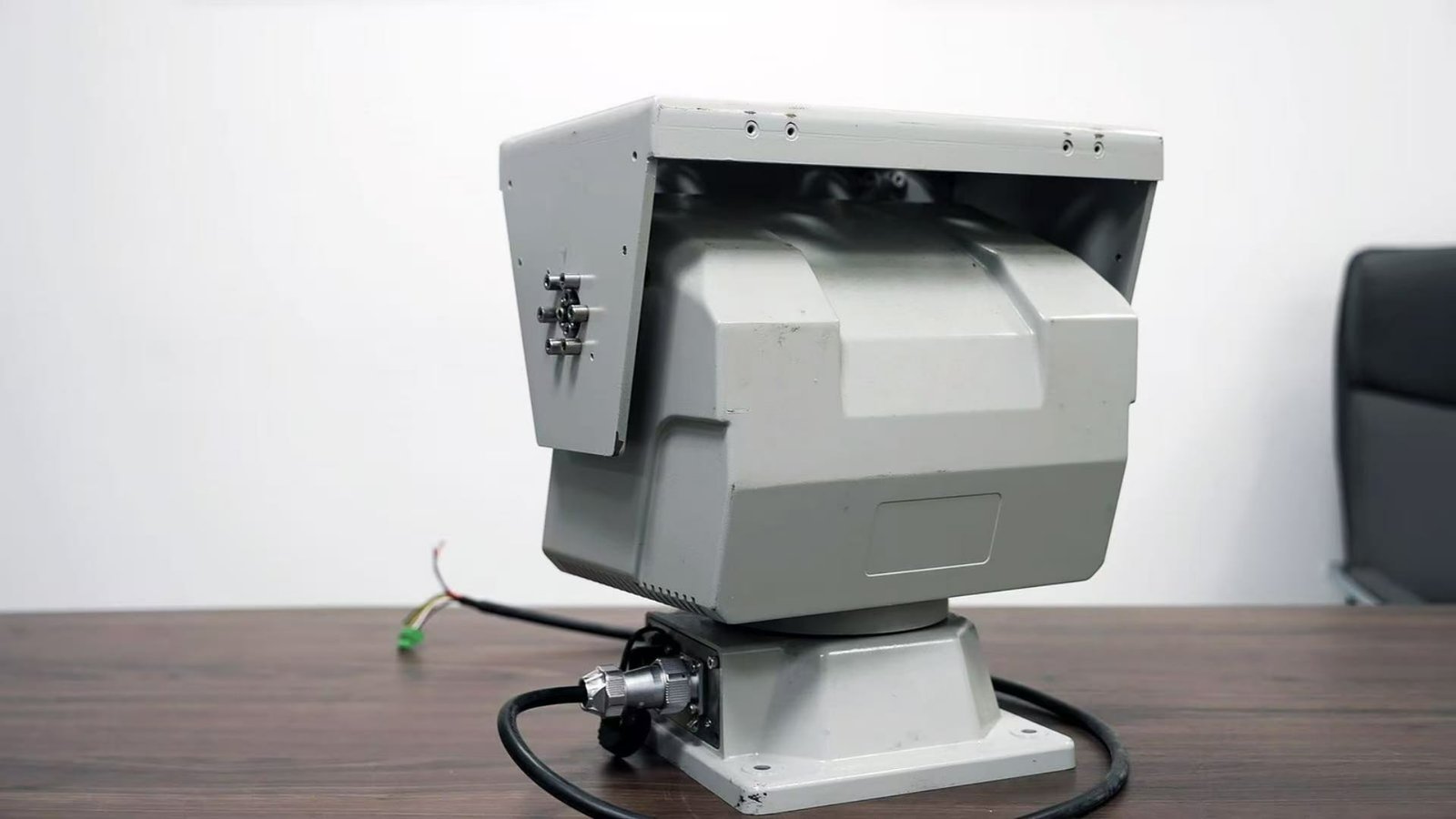
So when does a user need a pan tilt system, and when is a pan tilt zoom camera the better choice? If the project needs a moving platform that can carry different payloads, a pan-tilt positioner may fit better.
Payloads can include a thermal core, a visible camera block, a laser rangefinder, or a custom sensor. If the project needs a small, all-in-one device, a PTZ camera is usually the better choice.
It can monitor targets.
It can reposition and zoom in on them.
What Is a Pan-Tilt Positioner?
A pan-tilt positioner is a motorized mount.
It lets you control pan and tilt movement for attached equipment. Unlike a standard PTZ camera, the positioner itself is not necessarily the imaging device. Instead, it serves as the motion platform for another payload. That payload may be a visible camera, a thermal camera, a laser module, a radar-linked sensor head, or a multi-sensor package that combines several functions.
This distinction is important in industrial projects. A typical commercial PTZ camera is often an all-in-one product with built-in optics, electronics, and enclosure. A pan-tilt positioner is more common when the payload is heavier, the optics are more specialized, or the project requires a modular design.
In these cases, we choose the positioner because it moves well. It can also carry the required load safely over time. Mission-critical sectors like forest monitoring, perimeter security, and long-range observation use heavy-duty positioners for this reason.
In simple terms, if a PTZ camera is a complete moving camera, a pan-tilt positioner is the moving base that makes a specialized imaging system possible. For industrial users, that difference affects everything from enclosure size to wiring, integration, maintenance strategy, and payload flexibility.
Why Load, Accuracy, and Speed Matter
Load refers to the amount of weight a pan tilt system can carry. This is not just a mechanical number on a datasheet. In real projects, it determines whether the platform can support the chosen camera, lens, thermal module, laser unit, protective housing, wiper, and mounting accessories without instability or premature wear.
An undersized system may still move the payload, but it may run less smoothly. It may also position less consistently or have long-term reliability problems. That is why heavy-duty designs are typically used when the payload is larger or when multiple sensing devices are integrated on one platform.
Positioning accuracy describes how precisely the system can return to or hold a commanded angle. In a long-range surveillance project, a small pointing error can make a big difference. It can mean centering a vessel or missing it. It can also mean checking the right insulator string or the wrong structure.
For preset-based use, accuracy also affects repeatability. The camera must reliably return to the same gate, tower, or patrol checkpoint each time.
Rotation speed is the third critical parameter. A slow system may be acceptable for routine scanning or thermal monitoring over a wide area, but it may be less suitable when targets move quickly or when the system has to jump between alarm zones.
By contrast, a very fast system is not automatically better. Excessive speed can reduce stability, especially if the payload is heavy or the installation is exposed to wind.
For procurement and engineering teams, these three factors are closely linked. Load affects the mechanical burden.
Accuracy affects whether the device points where it should. Speed affects response and tracking behavior. Evaluating them together leads to better system selection than looking at any one number in isolation.
Key Features of an Industrial Pan Tilt System
A true industrial pan tilt system is designed around application demands rather than only camera convenience. One common feature is heavy-duty payload support, which allows the unit to carry larger lenses, thermal payloads, multi-sensor heads, or protective accessories. This is important because industrial surveillance often requires more than a small integrated camera body. It may require a combined visible-and-thermal package, a laser rangefinder, or a stabilized sensor head for long-range work.
Another important feature is precise and stable movement. In consumer or light commercial setups, slight mechanical play may be acceptable. In industrial observation, it is much less acceptable because small pointing errors become more visible at long range.
Systems for wide-area inspection or target checks benefit from controlled acceleration, repeatable presets, and stable motion under load. This matters especially when the scene changes quickly or you mount the installation point high.
Outdoor weather resistance is also central. Industrial and infrastructure deployments often involve dust, rain, salt air, temperature swings, and vibration. Outdoor pan tilt units are therefore expected to support weatherproof housings, corrosion-resistant structures, and reliable operation under environmental stress. The exact specification depends on the site, but in outdoor security and infrastructure monitoring, environmental suitability is not optional.
A further characteristic is compatibility with visible and thermal imaging. Visible cameras are useful for daytime identification and general monitoring. Thermal cameras are often more effective for low-visibility detection, night observation, and wide-area early warning.
Industrial platforms frequently need to support one or both, depending on the threat model and viewing conditions. The same applies to compatibility with laser modules or other sensors in more complex systems.
Finally, industrial users usually expect remote control and system integration. The pan tilt unit should work with software, controllers, or surveillance platforms.
This lets operators call presets, patrol routes, or alarm-linked movements. It also avoids manual action at the installation site. In remote and critical sites, that integration is part of the system’s operational value.
How to Choose the Right Pan Tilt System
The most practical way to choose a pan tilt system is to start with the payload, not the movement range. Confirm the total weight of the camera, lens, housing, thermal block, wiper, and any added devices.
Do this before you choose the platform. If the payload is underestimated, the system may appear suitable on paper but perform poorly in the field. This is one reason buyers of industrial systems often begin with the full sensor stack rather than the pan tilt base alone.
The next step is to identify the camera type. A visible-only camera may be enough for daytime inspection or short-to-medium-distance monitoring. A thermal camera may be better for night detection and for haze, smoke, or low-contrast scenes. A dual-sensor or multispectral configuration may make sense when detection and identification both matter across different lighting conditions.
Monitoring distance is another major filter. If the system only needs to scan a nearby yard, a compact PTZ camera may be enough. If the job involves offshore observation, long fence corridors, or early warning over a wide landscape, the system may need a longer focal length, higher stability, and possibly a heavier-duty mount.
Long-range use cases need more accurate pointing. They also need stronger mechanical rigidity. They need better environmental stability than short-range indoor monitoring.
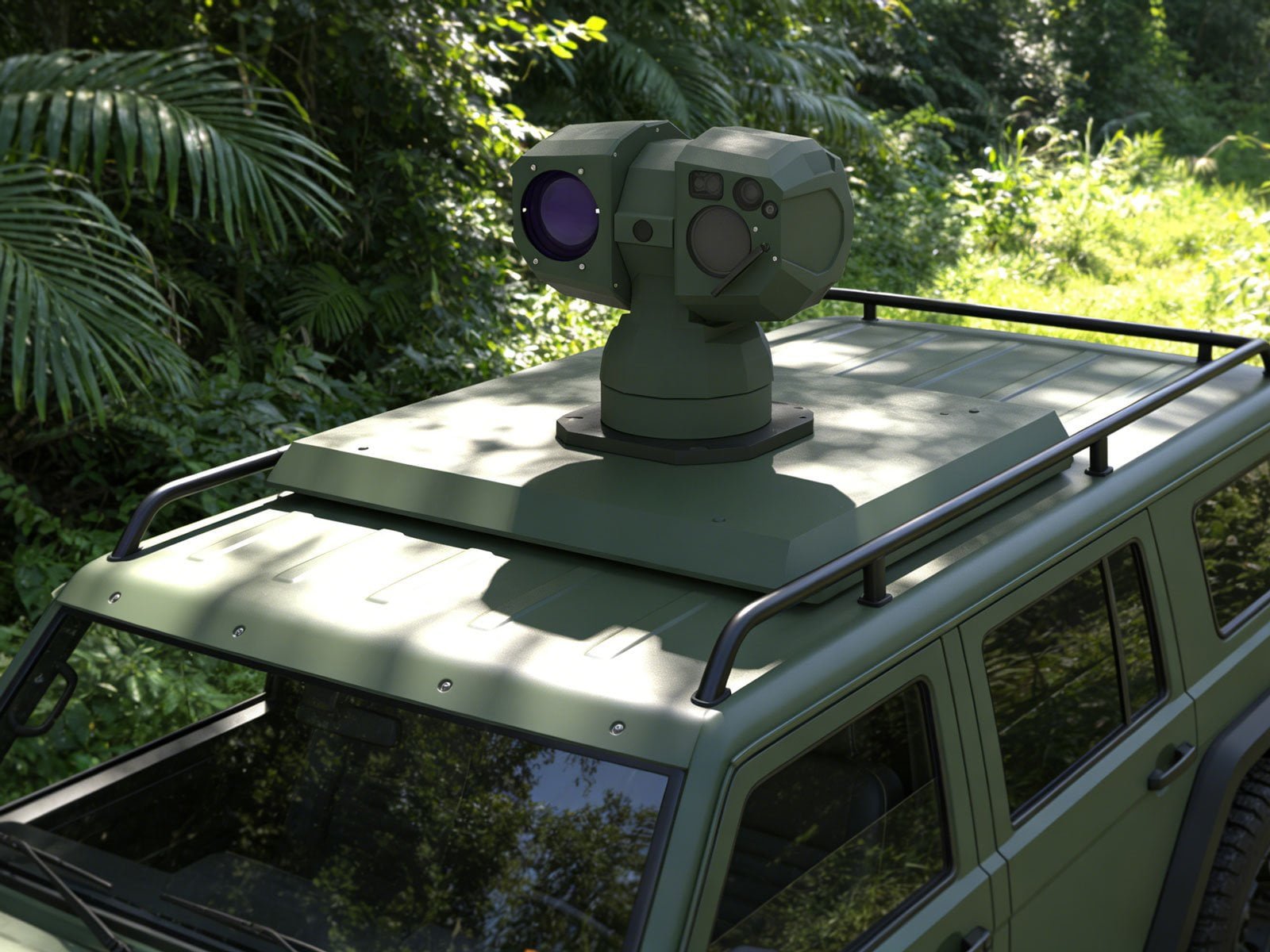
The installation position should also guide selection. Pole-top, mast, rooftop, coastal tower, vehicle roof, and industrial structure mounts all introduce different constraints. Vehicle-mounted systems may focus on being compact, handling vibration, and working with mobile power.
Tower-mounted systems may focus on wind resistance, long range, and stable long-term operation. Mobile PTZ examples on the market show that vehicle deployment is a distinct design condition, not simply a smaller version of fixed-site surveillance.
Then consider the weather environment. Coastal deployments may involve salt corrosion. Desert or mining environments may involve dust. Substations and exposed infrastructure may require robust sealing and stable performance through temperature swings.
Forest and wildfire monitoring may require long-running outdoor operation across remote terrain. The right outdoor pan tilt unit should be selected for the site’s actual exposure, not for a generic “outdoor” label alone.
Finally, assess speed requirements and control needs. If the system mainly scans fixed sectors, moderate speed and high stability may be more useful than aggressive motion. If the site involves rapid response to moving targets, faster pan and tilt may matter more.
On the control side, check how the platform will be integrated: local joystick, network control, alarm linkage, video management system, or multi-sensor platform. A technically capable pan tilt device is only useful if it fits the project’s control architecture.
Common Industrial Use Cases
Border surveillance often uses pan-tilt or pan-tilt-zoom systems.
The monitoring corridor is long and open.
It is also hard to predict in day-to-day operations. Operators may need to scan wide terrain, return to known crossing points, and zoom in to check movement.
They can do this without deploying many fixed cameras.
Coastal monitoring works well with these systems. Targets move across a large maritime area.
Conditions can change quickly. Pan-tilt movement helps track boats or shoreline activity. Longer-range optics and thermal payloads improve observation beyond visible-light limits.
Substations benefit from pan tilt and thermal observation because operators may need to verify perimeter alarms. They may also monitor remote zones and observe equipment areas without placing cameras at every angle. Thermal-plus-radar or thermal-plus-PTZ setups are used to monitor power infrastructure. They improve situational awareness around the site.
Power line inspection can use pan-tilt systems when engineers need controlled viewing from a fixed point. The value here is not only zoom, but also accurate positioning when checking specific towers, components, or corridors across distance. The more specialized the optics, the more relevant a positioner-based approach can become.
Industrial perimeter security is a great fit. Large yards, plants, and storage areas often have wide open space. They also have only a few operators. PTZ systems help confirm alarms, check remote areas, and adjust to site changes more easily than fixed cameras alone.
Forest fire detection often relies on long-range observation and continuous scanning across broad terrain. In that setting, a pan-tilt or PTZ platform can run repeat patrol routes. It can provide wide-area visual or thermal viewing from one tower or remote station.
Traffic monitoring benefits from pan tilt zoom systems because the operator may need both scene overview and target detail. A system can track an approaching vehicle, inspect incidents, or move between lanes, intersections, and access roads as needed.
Vehicle-mounted observation uses compact or ruggedized pan tilt zoom systems when mobility is part of the mission. These systems are valuable for temporary use, patrol support, incident response, and observation. They work from moving or parked vehicles when fixed cameras are not available.
Pan Tilt, Pan Tilt Zoom, and Pan-Tilt Positioner: Which One Do You Need?
If your main need is simply directional movement, and the payload may vary by project, a pan-tilt positioner is often the most flexible choice. It makes sense when the camera or sensor package is specialized, heavier, or modular. This is common in long-range and multi-sensor industrial projects.
A practical selection process works best in this order: define the scene. Estimate the viewing distance. Then decide if an integrated PTZ camera is better, Or choose a separate heavy duty pan tilt platform. That approach is more reliable than choosing by name alone.