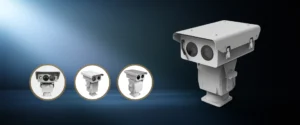
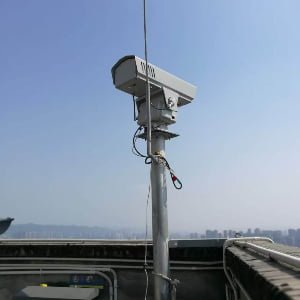
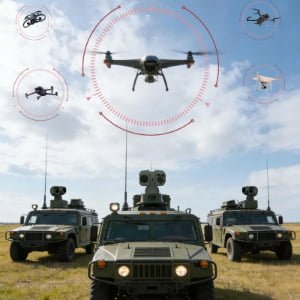
A reliable day night surveillance camera system is not built by choosing one powerful camera. It is built by matching the right sensor stack to the scene.
For a coastal perimeter, oil depot, railway corridor, or border site, the system needs more than visible video. It needs thermal detection, optical zoom, IR assistance, stable PTZ control, and smart alarm integration working together.
That is where a multi-sensor PTZ architecture becomes useful. Instead of treating thermal, visible, and IR cameras as separate devices, system designers can combine them into one coordinated surveillance stack for day, night, and harsh outdoor conditions.
Why Day/Night Surveillance Is a System Design Problem
Many security projects start with a simple question: “Can this camera see at night?”
A better question is: “What should the operator detect, verify, and track in each lighting condition?”
Visible cameras are strong when there is enough light and the target needs detail. Thermal cameras are better when the target must be detected in darkness, haze, backlight, or complex outdoor conditions. IR PTZ cameras support night-time visual confirmation when visible images still matter.
For system designers, this means the camera choice should follow the mission:
- Detect movement before it reaches the protected zone.
- Confirm whether the target is a person, vehicle, boat, animal, or drone.
- Track the target smoothly across a wide area.
- Trigger alarms with fewer false events.
- Connect video, AI analytics, VMS, and command center workflows.

Common Scene Categories
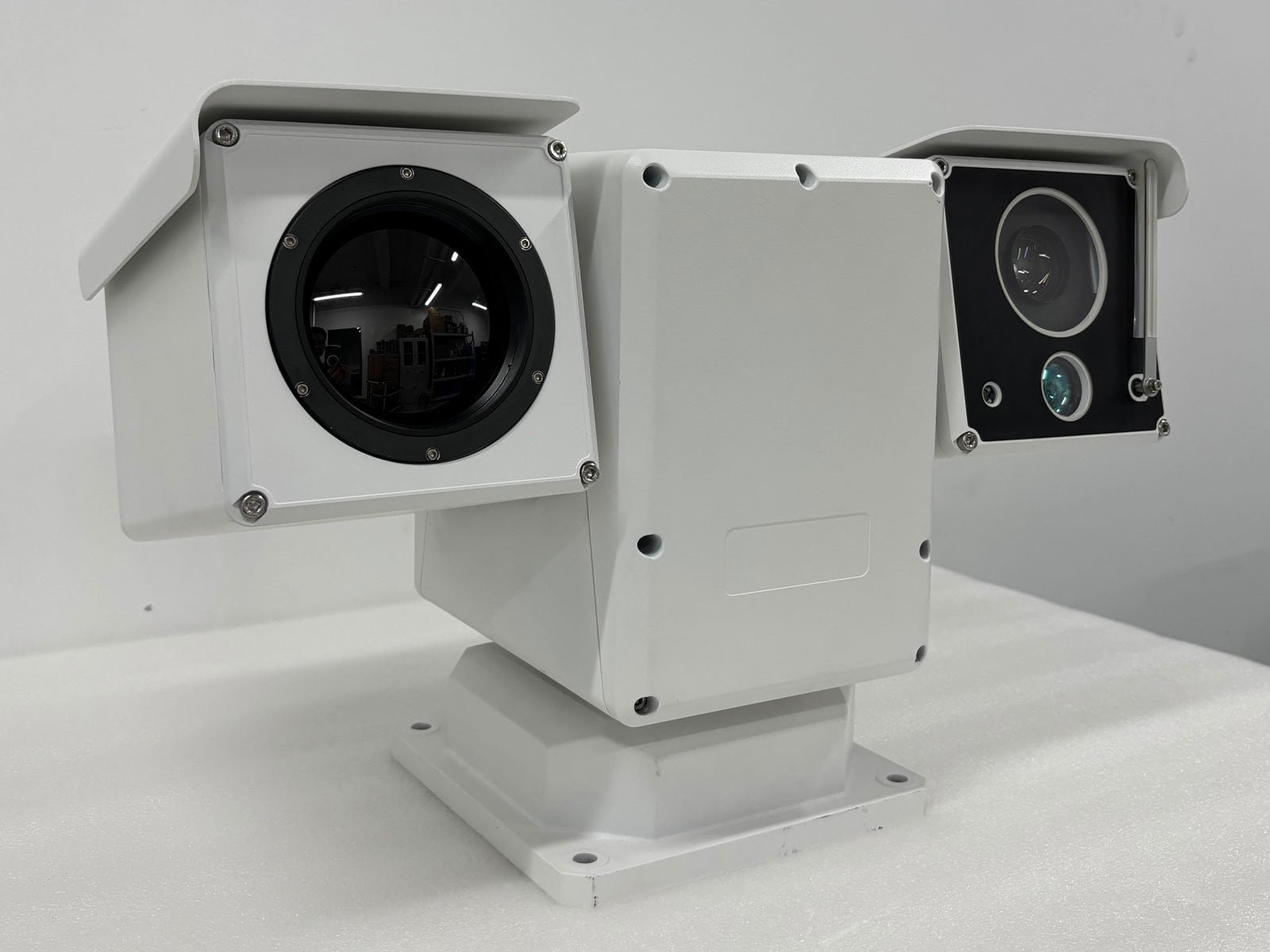
Different sites need different levels of sensor fusion.
A factory perimeter may need human and vehicle detection after working hours. A bridge or railway line may need long-distance observation in low light. A port may need wide-area monitoring across water, fog, and reflective surfaces. A forest fire project may need thermal abnormality detection before visible smoke appears.
For border checkpoints, mountain passages, restricted zones, and coastal boundary areas, a Border Surveillance System usually needs thermal detection, optical zoom, PTZ tracking, and alarm linkage working together. These projects are less about recording video and more about early detection, target verification, and fast response.
For long-range outdoor projects, multi-sensor systems are often designed around visible zoom, thermal imaging, laser ranging, and industrial PTZ control. This reduces the need for separate devices and makes field deployment easier for integrators.
Sensor Stack Options for Day and Night Monitoring
The table below shows how a system designer can think about sensor selection.
| Surveillance Need | Recommended Stack | Best-Fit Scenario | Design Note |
|---|---|---|---|
| Basic night monitoring | Low-light PTZ + IR illuminator | building entrances | Good when the target distance is moderate and visible detail is still required. |
| Outdoor perimeter protection | Thermal + visible PTZ | Industrial parks, power stations, fences | Thermal detects the event; visible zoom helps the operator verify the target. |
| Long-range wide-area monitoring | Thermal PTZ + long optical zoom + laser rangefinder | Border, coast, port, bridge, railway | Useful when distance, target location, and continuous tracking matter. |
| Harsh-weather surveillance | Thermal visible integration + AI alarm linkage | Oil & gas, remote sites, mountain roads | Thermal helps in darkness and complex outdoor conditions; AI reduces manual workload. |
| Mobile or temporary deployment | Compact dual-sensor PTZ | Vehicles, patrol units, robotics | Choose lower power, compact structure, and easier integration. |
Thermal, Visible, and IR: What Each Layer Does
1. Thermal Layer: Detection
Thermal imaging detects heat signatures instead of relying on reflected light. This makes it valuable for night operation, strong backlight, haze, smoke, vegetation edges, or large outdoor areas where lighting is uneven.
In a day night surveillance camera system, thermal is often the first layer for detection. It answers: “Is something there?”
This is especially useful for perimeter protection, long-distance monitoring, forest fire prevention, industrial safety, and critical infrastructure security. When the visible channel cannot provide enough information, thermal imaging can still help operators notice movement or abnormal heat.
2. Visible Layer: Identification
Visible zoom is used when the operator needs more detail: color, clothing, vehicle type, license plate area, vessel shape, or behavior.
For example, after a thermal alarm detects a moving object near a fence line, the visible PTZ can zoom in for confirmation. In long-range applications, optical zoom is important because the operator may need to check a target hundreds of meters or even several kilometers away.
Thermal detects the event. Visible video helps explain what the event is.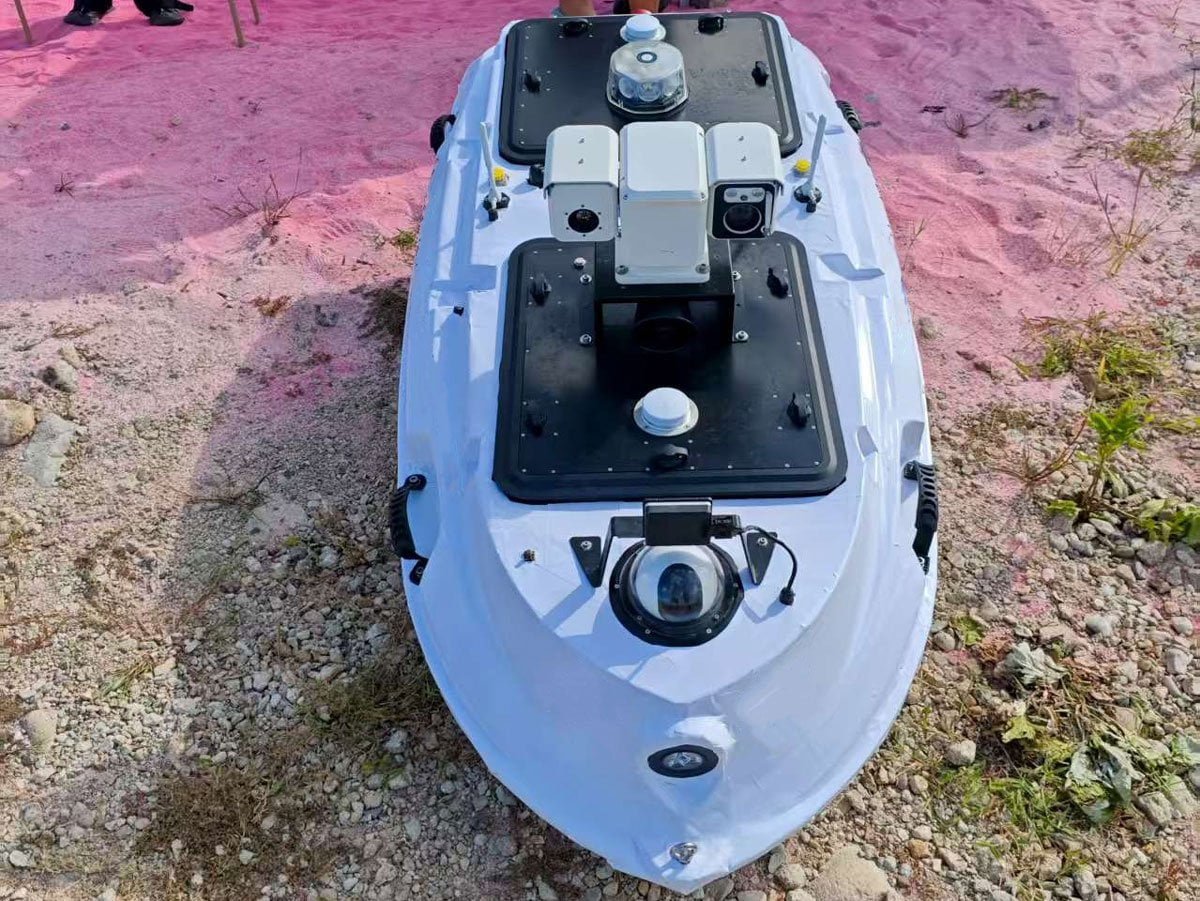
3. IR Layer: Night-Time Visual Support
IR illumination supports visible imaging at night. It is not the same as thermal imaging. Thermal detects heat; IR helps the visible camera see in low or no visible light.
An IR PTZ camera is especially useful when operators still need recognizable visual images at night. For example, a thermal channel may detect a person at the edge of a restricted zone, while IR-assisted visible video helps confirm whether the person is a worker, intruder, or false alarm caused by a moving heat source.
IR is not always required, but it is valuable when the project needs both night vision and visual evidence.
4. AI and Alarm Layer: Workflow
A camera system becomes more valuable when it reduces operator workload.
For system designers, AI should not be treated as a separate feature. It should be designed into the alarm workflow: intrusion detection, line crossing, loitering, crowd gathering, abnormal sound alerts, or target tracking.
The goal is not only to capture video. The goal is to help the security team know where to look, what happened, and how fast they should respond.
In a well-designed system, the process can work like this:
Thermal detects movement → AI classifies the target → PTZ tracks the target → visible zoom confirms details → VMS triggers alarm → operator reviews and responds.
Deployment Model: From Site Survey to Acceptance
A practical all-weather surveillance project should begin before the camera model is selected.
First, define the target. Is the system watching people, vehicles, UAVs, boats, smoke, or equipment temperature? Then define distance. Detection, recognition, and identification are different tasks, and each one needs a different lens and sensor choice.
Next, map the environment. Open coastline, narrow railway corridor, fenced power station, and petrochemical area all create different camera positions and blind zones. A typical deployment flow looks like this:
- Confirm scene type, target size, and required distance.
- Choose thermal lens range, visible zoom level, and IR illumination distance.
- Decide whether laser rangefinding is needed.
- Set PTZ mounting height, pan/tilt coverage, and preset patrol routes.
- Check power, network, solar, fiber, or wireless transmission conditions.
- Connect ONVIF, PELCO-D, RS485/422, VMS, alarm I/O, and storage.
- Test day, night, rain, fog, backlight, and low-temperature operation.
For long-range perimeter projects where target distance and location matter, a Multi-Sensor Thermal PTZ Camera with Laser Rangefinder and GPS can support visible verification, thermal detection, distance measurement, and PTZ positioning in one system.
This deployment process helps avoid a common mistake: choosing the camera first and discovering later that the lens, mounting position, or integration interface does not match the real site condition.
Where Multi-Sensor PTZ Makes the Most Sense
Thermal visible integration is most valuable where the cost of a missed event is high.
Typical applications include:
- Border and coastal surveillance
- Industrial perimeter security
- Oil and petrochemical sites
- Power and transportation corridors
- Ports and harbors
- Bridges and railways
- Forest fire prevention
- Critical infrastructure protection
These are not simple “camera watching a door” projects. They are wide-area monitoring tasks where distance, weather, lighting, vibration, and response speed all affect the final result.
In these environments, the camera system must do more than record. It must detect early, verify quickly, and support decision-making across different lighting and weather conditions.
Final Thoughts
A strong day night surveillance camera system is not about choosing between thermal, visible, or IR. It is about knowing when each layer should take the lead.
Thermal finds the target when light is poor. Visible zoom confirms details. IR supports visual monitoring at night. PTZ control keeps the target in view. AI and system integration help operators respond faster.
For system designers, the best result comes from matching the sensor stack to the real field condition, not from overspecifying a single camera.