Your high-precision PTZ camera needs to be perfect, but the video is jerky. This can cause you to lose your target. The motor inside your camera is likely the problem.
The choice between stepper and servo motors1 is crucial for PTZ performance. We chose servo motors1 because they offer a closed-loop system2 with an encoder3. This ensures higher precision, greater reliability, smoother movement4, and lower power consumption5 compared to the open-loop design of stepper motors.
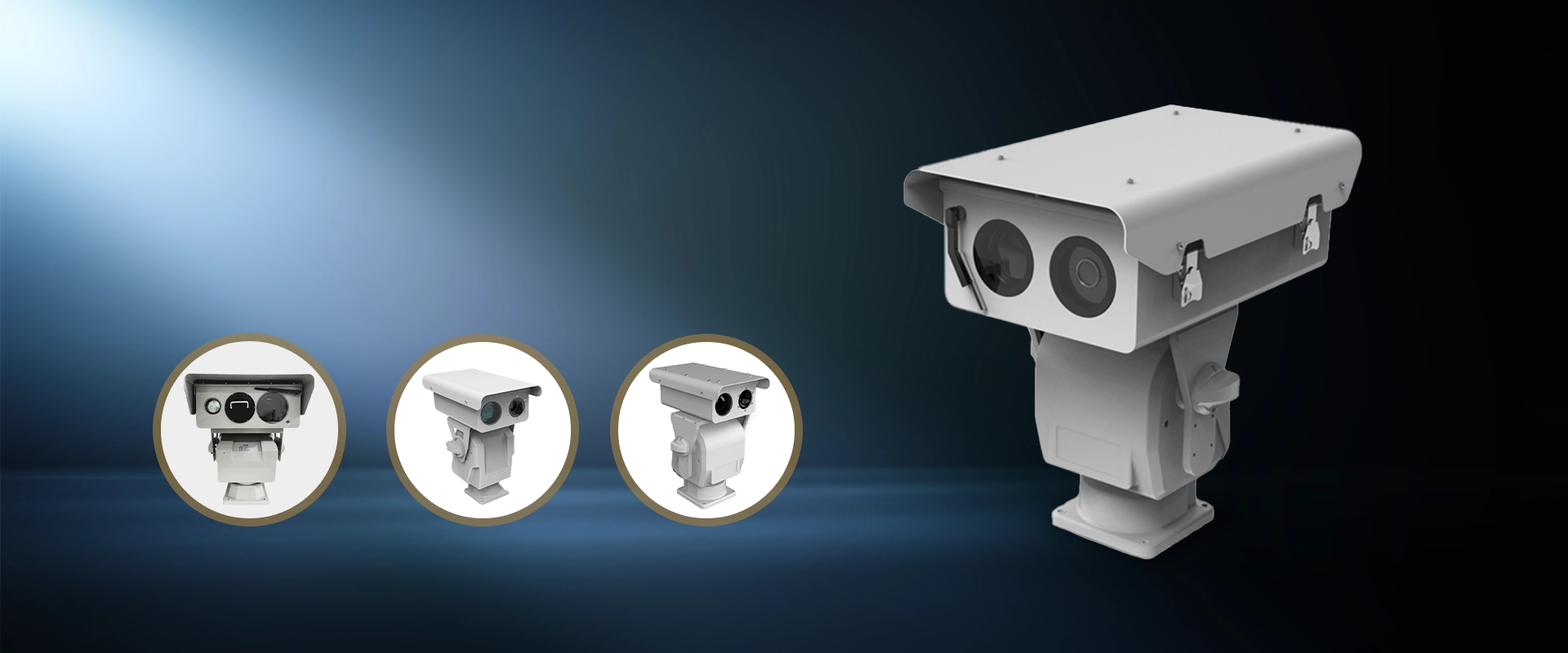
Choosing the right motor is a big decision. It affects everything from tracking accuracy6 to the system's lifespan. We put a lot of thought into the components we use inside our integrated PTZ camera systems. To really understand why we made this change, we need to look at how these motors actually work. It is a key part of what makes a PTZ system truly professional-grade, especially for demanding fields like defense and border security. Let's dive into the details.
What's The Core Difference In How They Work?
You hear "open-loop" and "closed-loop" but what does that mean for your project? The terms sound technical. This confusion can lead to choosing the wrong equipment for a critical mission.
Stepper motors use an open-loop system7. They receive electrical pulses and move a set amount. But they don't confirm if the move was successful. Servo motors use a closed-loop system2. An encoder3 sends feedback, confirming the exact position and making adjustments for perfect accuracy.
The Stepper Motor's "Trust" System
A stepper motor works on an open-loop principle. The controller sends a specific number of electrical pulses to the motor. In theory, each pulse makes the motor turn a precise, fixed angle, or "step". It’s like giving someone directions to walk 100 steps forward. You send the command and just trust that they took exactly 100 steps. The problem is, you never get confirmation. This system can "lose steps" if the motor is under too much load or moving too fast. The controller will think the camera is pointed in one direction, but it's actually lagging behind. For high-stakes surveillance8, this silent error is unacceptable. The faster you try to run a stepper motor, the higher the risk of losing steps becomes.
The Servo Motor's "Feedback" System
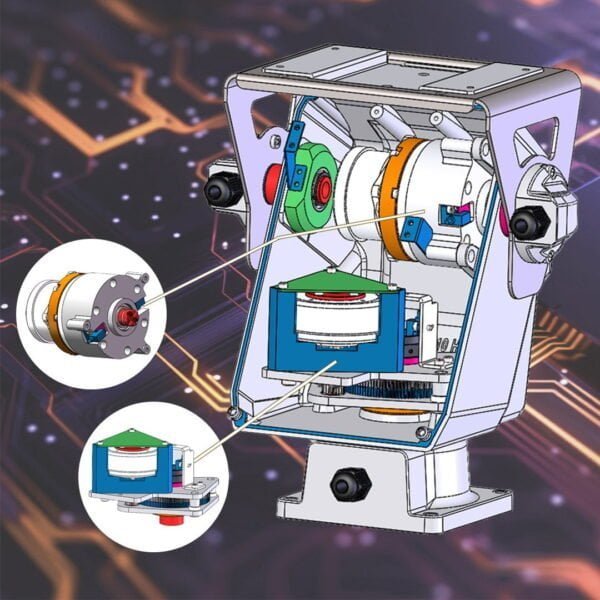
A servo motor, on the other hand, operates on a closed-loop principle. It doesn't just receive commands; it reports back on its actions. This is possible because a servo motor has a rotary encoder3 attached to its shaft. When the controller tells the motor to move, the encoder3 sends back a stream of pulses that reports the motor's exact position, speed, and direction. It’s like telling someone to walk 100 steps, and they count each step back to you. If they stumble on step 57, the system knows immediately and corrects the position. This constant feedback loop ensures the motor is always exactly where it needs to be.
| Feature | Stepper Motor | Servo Motor |
|---|---|---|
| Control System | Open-Loop | Closed-Loop |
| Position Feedback | No | Yes (Encoder) |
| Error Correction | No | Real-time |
| Risk | Can lose steps | Very low risk of error |
Which Motor Offers Better Control and Precision?
Precision is everything in security and defense. A tiny error in camera movement can mean losing a target miles away. This can compromise your entire operation and lead to mission failure.
Servo motors offer higher control precision. Their accuracy is guaranteed by a high-resolution rotary encoder3 on the motor shaft. Stepper motor precision depends on its fixed step angle, which is good but fundamentally less precise and adaptable than a servo's continuous feedback and correction system.
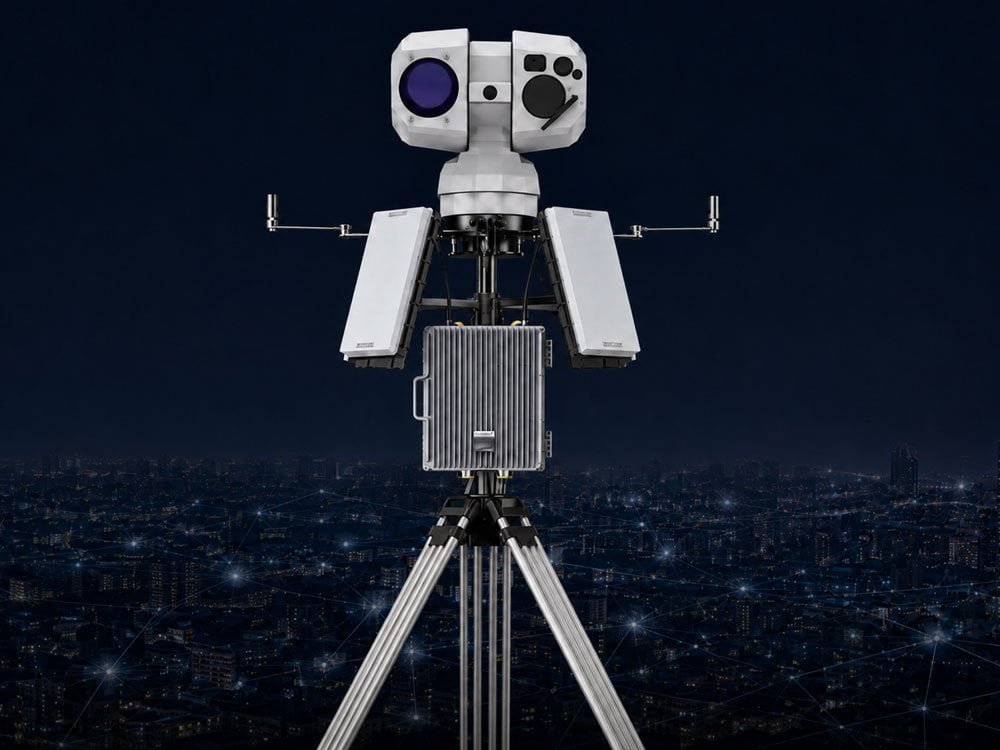
When you are tracking a small object from a long distance, precision is not a feature, it is a requirement. The motor's ability to aim accurately and hold its position determines the success of the system.
How Steppers Aim for Precision
A stepper motor's precision comes from its mechanical design9. The motor is built to move in fixed increments, called step angles. For example, a common step angle is 1.8 degrees. To improve this, a technique called "micro-stepping10" is used. It divides the full step into many smaller virtual steps, which makes the movement smoother and more precise. However, the accuracy is still based on a pre-set mechanical division. There is no system to actively verify that the motor has reached the exact micro-step position. It is like using a ruler with millimeter marks. You can be very precise, but you cannot accurately measure the space between the marks. It's a system that approximates precision but cannot guarantee it under all conditions.
How Servos Guarantee Precision
A servo motor's precision is guaranteed by its electronic feedback system. The rotary encoder3 is the heart of this accuracy. These encoder3s can be incredibly high-resolution, generating thousands of pulses for a single 360-degree rotation of the motor shaft. This allows the control system to know the motor's position with extreme accuracy. The system does not just move to a position; it constantly checks its location via the encoder3 and makes tiny, real-time adjustments to eliminate any error. It is like having a GPS that can track your position down to the centimeter and instantly correct any deviation from the planned route. This active, continuous correction is what provides true, reliable precision.
| Aspect | Stepper Motor | Servo Motor |
|---|---|---|
| Source of Precision | Mechanical Step Angle | Electronic Encoder |
| Feedback | None | Continuous |
| Smallest Movement | Limited by micro-step | Limited by encoder3 resolution (very small) |
| Reliability at High Load | Can lose accuracy | Maintains accuracy |
Why Did We Switch To Servo Motors For Our PTZ Systems?
We used to rely on stepper motors for some models. They seemed fast and cost-effective. But our own field tests11 revealed issues with stability and long-term reliability under demanding use.
We switched to servo motors1 after extensive testing. We found that even at a slower rated speed, the servo-driven PTZ was more reliable, durable, and provided smoother video. It also had higher precision, lower power use, a smaller size, and more torque12 than our previous stepper motor models.
Our decision was not based on datasheets alone. It came from rigorous, hands-on testing that simulated the real-world conditions our clients face. The results were clear and led us to make a significant upgrade to our product line.
Our Old Stepper Motor PTZ
We previously offered a PTZ system with a stepper motor that was rated for high speeds: 60°/s horizontal and 30°/s vertical. On paper, these numbers are impressive. For some applications, they were fine. However, during our tests for high-precision tracking13, we noticed problems. At high speeds, the video feed could show slight jitter. More importantly, we found a risk of the motor losing steps during rapid directional changes, which is common when tracking a fast-moving drone or vehicle. This meant the camera's pointing accuracy could degrade over time without the operator knowing. We also noted higher power consumption5 and heat generation, which are big concerns for equipment that needs to run 24/7 in harsh environments.
Our New Servo Motor PTZ
Our new medium-speed PTZ platform uses a servo motor, with rated speeds of 30°/s horizontal and 13°/s vertical. While the top speed on the datasheet is lower, the effective performance is far superior. Our tests showed several key advantages:
- Smoother Image: The servo's closed-loop control completely eliminates the micro-vibrations or jitter you can get from a stepper motor. The camera glides smoothly, which is critical for clear identification at long ranges.
- Higher Precision: The encoder3 feedback means we can point the camera with extreme accuracy and hold that position perfectly against wind or vibration.
- More Reliable & Durable: Servo motors are more efficient and generate less heat. With no risk of missed steps, they provide a much more dependable service life.
- Lower Power, More Torque: Servos deliver more turning force (torque12) for their size and power draw. This is a huge benefit for our integrated systems that carry multiple sensors like thermal and laser rangefinders.
| Parameter | Old Stepper PTZ | New Servo PTZ | Winner |
|---|---|---|---|
| Top Speed (on paper) | 60°/s H, 30°/s V | 30°/s H, 13°/s V | Stepper |
| Image Stability | Good, but jitter at speed | Excellent, very smooth | Servo |
| Control Precision | High | Extremely High | Servo |
| Reliability | Good, risk of lost steps | Excellent, no lost steps | Servo |
| Power Consumption | Higher | Lower | Servo |
| Overall Performance | Good | Superior | Servo |
Conclusion
In conclusion, our switch to servo motors1 was a key upgrade. It gives our clients the superior reliability, precision, and smooth control needed for critical surveillance and tracking missions.
Explore the benefits of servo motors to enhance your camera's performance and reliability. ↩
Learn how closed-loop systems improve accuracy and reliability in various applications. ↩
Discover the role of encoders in achieving high precision and feedback in motors. ↩
Explore the technology behind smoother camera movements for better video quality. ↩
Understanding power consumption can help you choose more efficient motor systems. ↩
Tracking accuracy is vital for effective surveillance; find out how to achieve it. ↩
Learn about open-loop systems and their limitations in precision applications. ↩
Understanding the challenges in high-stakes surveillance can improve your strategies. ↩
The design of motors plays a crucial role in their performance; explore this topic. ↩
Micro-stepping can enhance motor performance; find out how it works. ↩
Field tests provide real-world insights; learn why they are essential for reliability. ↩
Understanding torque is key to selecting the right motor for your application. ↩
High-precision tracking is essential for security; learn how to implement it. ↩