What Is a Pan Tilt Zoom (PTZ) Camera?
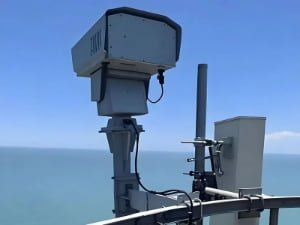
A pan tilt zoom camera, usually shortened to PTZ camera, is a motorized security camera that can move horizontally, tilt vertically, and zoom in on distant targets. That three-part capability is exactly what the name describes: pan for horizontal movement, tilt for vertical movement, and zoom for changing magnification and field of view. In the security industry, PTZ cameras are primarily used where one camera needs to cover a large area and still provide close-up visual verification when something happens. Current industry guides from Avigilon, Verkada all describe PTZ cameras as the right fit for large, open, or fast-changing environments where operators need both coverage and detail.
What makes PTZ cameras valuable is not just movement. It is the ability to change the camera’s view after installation. A fixed camera records one angle well. A PTZ camera gives a security team the option to patrol a perimeter, zoom in to verify a threat, follow suspicious movement, or jump to pre-set positions when an alarm is triggered.
How Does a Pan Tilt Zoom Camera Work?
A PTZ camera works through a combination of motorized mechanics, lens control, and software. The pan and tilt functions are handled by internal motors that move the camera left-right and up-down. Zoom is handled by a lens system that changes focal length so operators can move from situational awareness to close inspection. Most systems are controlled through a VMS, NVR, joystick, browser interface, or mobile client, and many models support presets, tours, and event-based movement.
Modern PTZ cameras are increasingly software-assisted. Many can move automatically on a schedule, switch to saved patrol points, or follow objects based on analytics. Axis notes that PTZ cameras can move between presets and zoom automatically in response to detected events; Current guides from Avigilon, Verkada all emphasize that PTZ cameras are most effective when they are integrated into a broader surveillance system that includes recording, alarms, analytics, and fixed cameras for persistent overview coverage. In newer AI-enabled deployments, video content analysis can trigger tracking for intrusion, line crossing, loitering, or other predefined behaviors.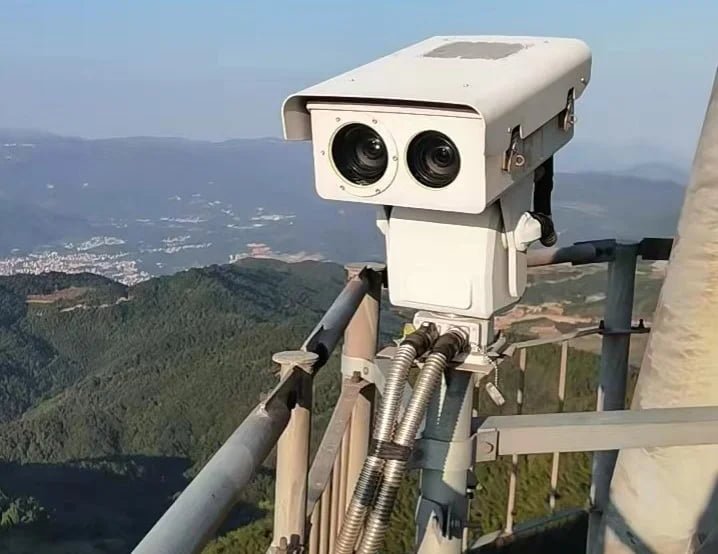
Key Features of PTZ Cameras
The most important PTZ camera features are movement range, optical zoom, preset positions, and remote control. A good pan tilt zoom camera should be able to patrol a large scene smoothly, jump to predefined viewpoints quickly, and zoom far enough to deliver usable identification details instead of a soft digital crop. This is precisely the primary reason why pan-tilt cameras are extensively deployed in applications such as intelligent substation inspection, perimeter protection for nuclear facilities, unmanned border outposts, low-altitude defense and drone detection, and forest fire prevention and early warning systems—as well as in any other environment where incidents occur at significant distances or where the direction of interest changes rapidly.
Current PTZ platforms increasingly support patrol mode, auto-tracking, and AI-assisted event response. Vivotek’s smart tracking examples show how intrusion, line crossing, loitering, and similar triggers can automatically steer a PTZ camera toward the subject of interest, while 2M Technology highlights patrol loops, face or vehicle recognition, and automated alerts as ways to reduce constant manual watching. This matters because most sites do not have a guard actively steering cameras every second of the day.
Finally, outdoor PTZ cameras need the right enclosure and environmental hardening. Senstar notes that outdoor PTZ cameras are typically built with weather-resistant housings and IP ratings, while Pelco’s maritime and oil-and-gas lines emphasize corrosion resistance, shock tolerance, harsh-environment design, and, where needed, explosion-protected construction. In industrial security, durability is not an extra feature. It is part of baseline suitability.
Pan Tilt Zoom Camera vs. Traditional Security Cameras
In most commercial projects, “traditional security camera” really means a fixed camera. The most practical comparison is not which one is “better,” but which one solves the surveillance problem with fewer compromises.
| Factor | PTZ Camera | Traditional Fixed Camera |
|---|---|---|
| Field of view | Can scan a large area with one device | Records one constant view |
| Zoom | True optical zoom on many models | Usually fixed lens or limited zoom flexibility |
| Coverage style | Flexible, active, operator-led or rule-based | Consistent, always-on monitoring |
| Evidence capture | Strong for live investigation and close-up verification | Strong for uninterrupted recording of a critical scene |
| Blind-spot risk | Can miss what happens outside the current viewing direction | No movement-related gap inside its fixed field of view |
| Best use case | Smart Energy & Electric Power/Border & Coastal Defense / Disaster Prevention & Mitigation/ Industrial Manufacturing & Specialized Environments | Entrances, hallways, cash points, chokepoints, fixed evidence zones |
| Staffing model | More valuable with active monitoring or automated rules | Effective even without active camera steering |
| Cost logic | May reduce camera count in large areas | Often cheaper per unit, but more units may be needed |
Different Types of PTZ Cameras
There is no single universal classification system, but buyers usually sort PTZ cameras by environment, connectivity, and sensor payload.
| PTZ Camera Type | What It Means | Best Fit |
|---|---|---|
| Indoor PTZ / Speed Dome | Compact motorized PTZ for controlled environments | Retail, lobbies, atriums, operations rooms |
| Outdoor PTZ | Weather-rated PTZ with environmental sealing | Intelligent Substation Inspection, Forest Fire Prevention, Unmanned Border Monitoring |
| IP PTZ Camera | Network-based PTZ controlled over IP infrastructure | Modern enterprise and multi-site deployments |
| PoE PTZ Camera | PTZ powered and connected over Ethernet where supported | Simpler network installations |
| Wireless PTZ Camera | PTZ using wireless transmission where cabling is difficult | Temporary sites, hard-to-wire locations |
| ePTZ Camera | Digital pan/tilt/zoom without motorized movement | Indoor overview, conferencing, low-risk observation |
| Thermal PTZ Camera | PTZ with thermal imaging for low visibility or night detection | Perimeter protection, coastal and border use, early warning |
| Bispectral / Dual-Sensor PTZ | Combines visible and thermal imaging | Critical infrastructure, maritime, all-weather security |
| Explosion-Protected PTZ | Built for hazardous or explosive-risk environments | Oil, gas, chemical, and refinery sites |
The “outdoor / wireless / IP / PoE” categories are standard industry classifications, while thermal, bispectral, and explosion-protected PTZs reflect how real buyers segment products for high-risk industrial deployments. ([Senstar][5])
Where Are PTZ Cameras Commonly Used?
For border early warning, border defense, and coastal defense, PTZ cameras are typically used as part of a layered surveillance design rather than as a stand-alone answer. PTZ and bispectral PTZ platforms for harsh marine environments, while Echodyne and FLIR show why high-security sites increasingly pair PTZ cameras with radar and thermal sensing for earlier detection, fewer false alarms, and better all-weather situational awareness. In other words, the PTZ camera is often the identification and assessment tool once another sensor or analytic points it toward the threat.
In lightweight AI surveillance, PTZ cameras are becoming more practical because analytics reduce the need for constant joystick control. PTZ cameras reacting to intrusion, boundary crossing, or loitering events, while 2M Technology points to patrol loops, recognition features, and automated alerts that help operators focus on genuine threats.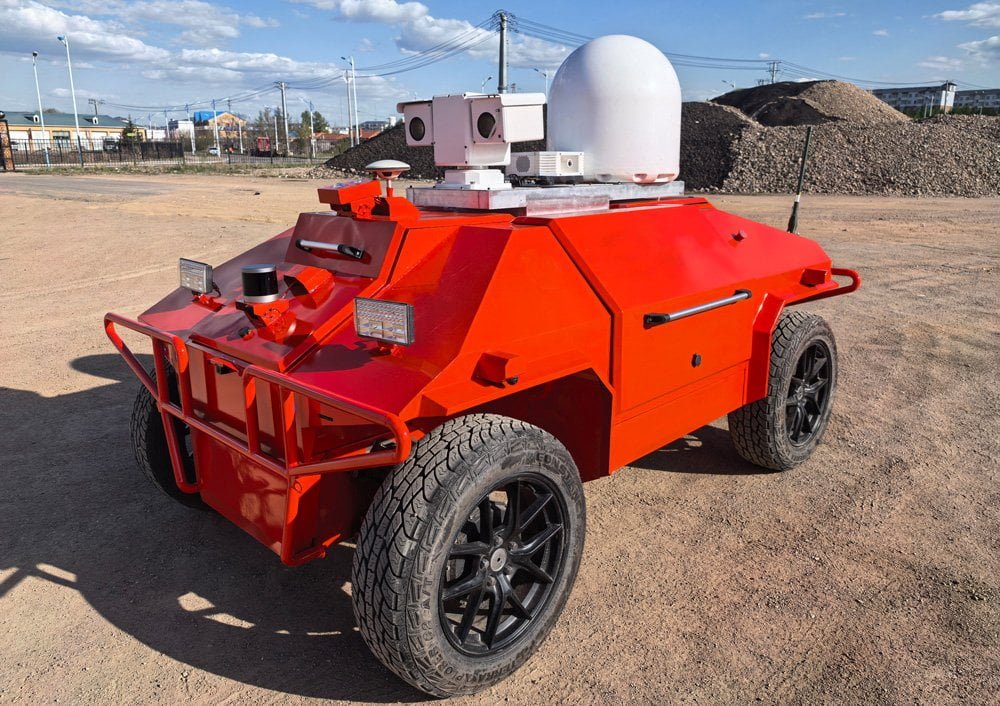
In oil and gas, key infrastructure, and industrial sites, PTZ cameras are used to monitor perimeter breaches, hazardous zones, loading activity, traffic flow, and remote assets. PTZ as a strong fit for critical infrastructure because it combines broad coverage, real-time control, and detailed monitoring, while Pelco’s oil-and-gas guidance highlights rugged and explosion-protected PTZ options, thermal imaging, interoperability, and the need to place cameras at entry points, high-risk areas, and perimeter lines. For industrial buyers, that makes PTZ a practical tool for both security and operational visibility.
PTZ cameras as especially practical on job sites because they can provide 360-degree coverage from a single mounting point while still letting managers inspect specific work zones in real time. That logic also extends to ports, energy sites, large warehouses, and remote compounds where broad situational awareness matters just as much as image detail.
Considerations for Choosing the Right PTZ Camera
The right PTZ camera starts with the site, not the spec sheet. Buyers should first define the surveillance goal: wide-area overview, long-range identification, perimeter tracking, low-light performance, or remote operational convenience. Then the main selection criteria become clearer: required pan/tilt range, optical zoom strength, resolution, low-light or IR capability, control interface, environmental rating, and integration with the existing VMS or alarm system.
Next, match the camera to the environment. Outdoor and industrial projects should evaluate weather rating, corrosion resistance, shock tolerance, low-light performance, and, where applicable, hazardous-area certification. Oil-and-gas environments may require explosion-protected housings and better thermal or infrared performance. Coastal sites may need anti-corrosion construction. High-risk perimeter sites may need thermal or bispectral payloads instead of visible-only imaging.
Third, think about system design, not just the camera. For critical infrastructure and long-range perimeter protection, PTZ cameras are strongest when integrated with analytics, fixed overview cameras, or radar. A PTZ camera can look in any direction, but it can still only look in one direction at a time. The best projects account for that.
Future Trends in PTZ Camera Technology
The PTZ camera market is moving toward smarter, more sensor-rich platforms. One clear trend is AI-assisted tracking, where the camera does not simply respond to manual commands but automatically follows people, vehicles, or alarm objects based on rules and analytics. Another is sensor fusion: visible, thermal, radar, and analytics working together so the system can detect earlier, classify more accurately, and zoom in faster. This is especially relevant in border, coastal, energy, and other mission-critical deployments.
The other major trend is that PTZ cameras are becoming more specialized. Instead of one generic model serving every use case, buyers are increasingly choosing among standard security PTZs, rugged outdoor units, thermal PTZs, bispectral platforms, and explosion-protected models. That is a sign of a more mature market: the question is no longer simply “What is a pan tilt zoom camera?” but “Which PTZ camera architecture best fits this site, this threat model, and this operating environment?”