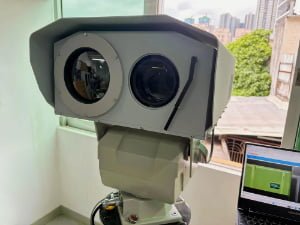
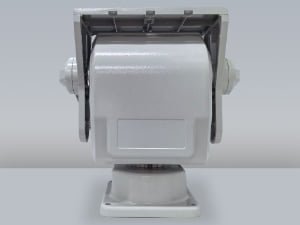
What Harsh Environments Really Demand
Coastal towers, border fences, port perimeters, offshore structures, and remote utility sites all punish surveillance hardware in ways that a normal “outdoor” camera does not. Rain and dust are only part of the story. In the field, the harder problems are often salt fog on exposed fittings, vibration on a tall pole, sunlight baking a housing all afternoon, moisture creeping in through cable entries, and the simple fact that maintenance may require a lift, a permit, or a long drive. IEC 60529 defines IP codes around ingress of solids and water, but it explicitly leaves corrosion, solar radiation, icing, and condensation outside the IP code itself, which is why an outdoor label alone is not enough for a coastal surveillance camera or a harsh environment PTZ deployment.
That gap between “outdoor” and “project-ready” is easy to miss during procurement. The market has already moved beyond simple enclosure claims: current rugged PTZ products are commonly positioned around combinations such as IP66/IP67, NEMA 4X, wind-load tolerance, wide operating temperatures, optical stabilization, stainless steel anti-corrosion construction, wipers, and thermal-plus-visible payloads. That tells you what serious project teams are actually evaluating today.
A rugged PTZ camera therefore needs to be selected as part of a working surveillance system, not as an isolated catalog item. Resolution and zoom matter, but so do corrosion resistance, mounting stability, cable sealing, VMS/NVR fit, maintenance access, documentation, and lifecycle support. For project contractors and security integrators, the real question is not “Can the camera produce a sharp demo image?” It is “Will this system still be stable, serviceable, and approvable after months or years on site?”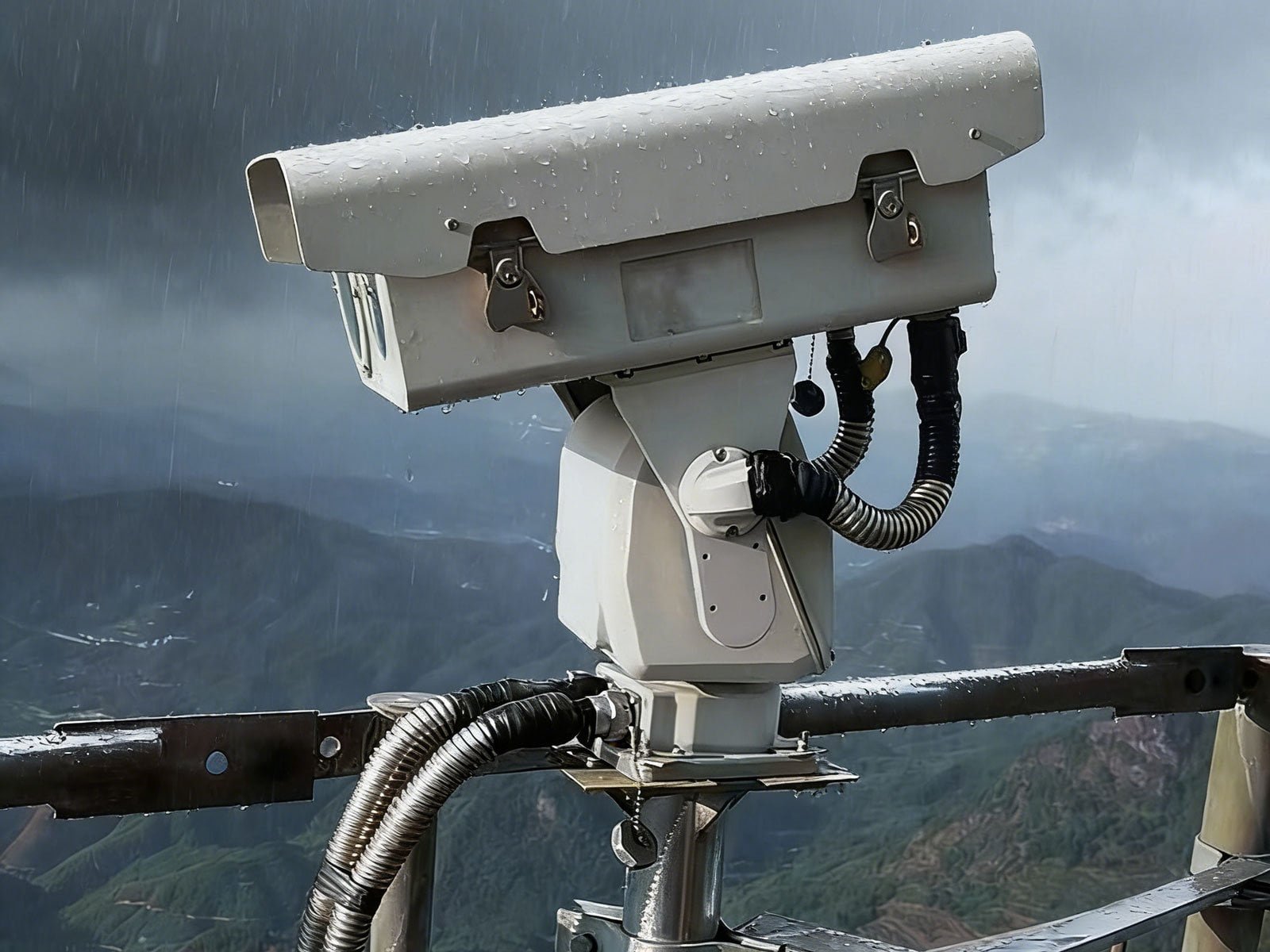
Why harsh deployments change PTZ selection
On a sea-facing mast, a border tower, or a remote industrial perimeter, a camera problem is rarely just a camera problem. If the bracket starts to corrode, the image becomes shaky at full zoom, or technicians have to reopen the housing because the cable entry was not properly planned, the project pays for it again and again — in extra site visits, downtime, and unhappy operators. That is why rugged PTZ camera selection should begin with the actual deployment risks, not just the zoom range or resolution on the datasheet.
The table below turns the most common field problems into evaluation items. It reflects the fact that IP ratings cover ingress, while NEMA outdoor types add outdoor-use conditions such as hose-directed water, icing, and—in certain types such as 4X—added corrosion protection. It also reflects how current rugged PTZ offerings address anti-corrosion design, stabilization, and multispectral sensing.
| Deployment risk | Typical field example | What usually goes wrong | What to evaluate |
|---|---|---|---|
| Salt fog and corrosion | Sea-facing tower, port gate, offshore platform | Corroded fasteners, cable glands, brackets, connectors | Housing material, coating, stainless options, sealed interfaces, anti-corrosion camera design |
| Wind and vibration | Border mast, trailer mast, coastal pole | Unusable long-zoom image, preset drift, unstable tracking | Mechanical stiffness, stabilization, mounting design, pan-tilt accuracy |
| Heavy rain and humidity | Tropical coastal site, marine terminal | Water ingress, condensation, dirty view window | IP protection, drain path, wiper, sun shield, cable sealing |
| Dust and debris | Desert border line, industrial yard | Mechanical wear, reduced visibility, more maintenance | Enclosure sealing, lens protection, cleaning access |
| Wide temperature swing | High-altitude site, desert day/night cycle | Fogging, electronics stress, sluggish movement | Operating range, heater/defog support, thermal management |
| Remote access | Pipeline, forest edge, remote perimeter | High service cost, long downtime | Spare parts planning, serviceability, installation docs, supplier responsiveness |
Deployment risks in coastal, border, and harsh-weather projects
A project team usually sees the consequences of wrong camera selection only after installation. Salt spray does not usually destroy a unit on day one; it shortens life by attacking small external parts first. Wind does not always knock a camera down; it makes long-range observation less useful because image movement increases as focal length increases. Moisture problems do not always start with the main housing; they often start at connectors, junction boxes, and cable exits. These are the details that separate an acceptable lab result from a dependable field deployment.
For a coastal surveillance camera, corrosion deserves more attention than many first-time buyers expect. IEC 60529 makes clear that corrosion is outside the IP code itself, while NEMA 4X is explicitly described as adding increased corrosion protection when properly installed. That is why coastal and marine buyers often ask for more than an IP67 PTZ camera claim; they want to understand enclosure material, surface treatment, fasteners, cable protection, and whether the design was actually intended for corrosive environments.
The same logic applies on exposed border and infrastructure sites. A camera mounted on a rigid building façade and a camera mounted on a tall pole in crosswind may share the same model number, but they do not face the same operating reality. One may mainly need proper ingress protection and clean networking. The other may need a stronger mount, more stable pan-tilt behavior, better anti-shake performance, and a more conservative maintenance plan. That difference is easy to overlook when procurement is driven only by spec-sheet comparison.
Housing, materials, and protection ratings
An IP67 PTZ camera can be a reasonable starting point for harsh outdoor work, but it is not the whole answer. IEC 60529 classifies protection against solid ingress and water ingress. It does not claim to cover corrosion, solar radiation, icing, condensation, or external mechanical impacts; those are left to relevant product standards and product-specific design. In practical terms, that means a camera can have a strong IP label and still be the wrong fit for a sea-facing, chemical, or high-vibration site.
For North American procurement teams, NEMA type language can also be useful. NEMA Type 4X, for example, is defined for indoor or outdoor use with protection against windblown dust, rain, splashing water, hose-directed water, external ice formation, and an increased level of protection against corrosion. This does not make NEMA “better” than IP by default; it simply means the two systems describe different things and are best read together when the project is exposed and long-lived.

That is why an anti-corrosion camera conversation needs to go beyond “Is it waterproof?” A better project question is: What exactly is protected, with which material, and where are the weak points likely to appear after 12 to 24 months? Real answers usually involve housing alloy or stainless steel choice, surface treatment, fastener material, sealed connectors, cable entry design, wipers, and sun shields. Those details are common in serious rugged PTZ products for marine and corrosive sites because they affect real maintenance cost.
Optics, imaging, and stability for long-range surveillance
Long-range surveillance is not a screenshot contest. The image only has value if operators can use it to detect, verify, and follow something in the conditions that actually occur on site. That is why rugged PTZ design in the market now often combines long zoom with stabilization, wide operating ranges, and multispectral or dual-sensor options rather than relying on a visible channel alone.
Visible imaging still matters for scene detail and recognition, especially where operators need to confirm what they are seeing. But thermal imaging becomes more valuable when the site has darkness, glare, smoke, fog, or mixed visibility. In current bispectral and multispectral security platforms, the logic is clear: thermal helps with detection and persistence in difficult visibility, while visible imaging supports recognition and context when the scene allows it.
This is also where project trade-offs matter. Not every site needs thermal, and not every long-range site needs the most aggressive zoom. A short coastal perimeter with strong lighting and easy service access may benefit more from corrosion resistance, low-light visible performance, and clean VMS integration than from a complex multisensor payload. A remote border tower with uncertain visibility may justify thermal plus visible plus AI cueing because the cost of missed detection or repeated service visits is higher. The right answer depends on operational distance, target type, lighting pattern, mounting stability, and the workflow in the control room.
System integration and deployment design
Even a mechanically sound harsh environment PTZ can slow down a project if it does not fit the rest of the system. ONVIF’s profiles exist precisely because cameras, clients, and video platforms need a common interoperability layer.
On larger systems, rugged cameras also have to work as one part of a detection chain. Current security portfolios increasingly group PTZ, thermal vision, analytics/AI, VMS, and even radar-linked bundles in the same stack, which reflects how perimeter and long-range systems are now designed in practice. When a contractor is deploying on towers, coastlines, mobile trailers, or fixed critical infrastructure, the integration questions are predictable: stream compatibility, PTZ control, alarm logic, user rights, power design, network path, and how the camera behaves when multiple events occur at once.
This is also the point where JEC PTZ should be written into the article as project support rather than as a slogan. JEC’s site positions the company around integrated PTZ and thermal imaging systems, OEM/ODM customization, compliant electro-optical solutions, and application areas such as coastal surveillance, border surveillance, anti-drone, critical infrastructure, and forest fire detection. In a practical blog, that positioning is most useful when translated into a workflow: narrowing the right sensor mix, enclosure treatment, mounting method, interface set, and document pack before the BOM is frozen and before installation teams inherit avoidable integration problems.
Maintenance, lifecycle, and procurement considerations
In public-sector, industrial, and critical-infrastructure projects, documentation can matter almost as much as hardware. NIST’s IoT procurement guidance makes the same point in a broader device-security context: both technical capabilities and non-technical supporting capabilities matter, and weak documentation or missing manufacturer support can create approval and integration problems later. That is directly relevant to networked cameras used in monitored systems. A rugged PTZ camera that cannot be documented, updated, integrated, or supported cleanly may still become the wrong procurement decision even if the optics are good.
This is where JEC PTZ can be positioned in a way that feels useful to a B2B reader. The company’s public site emphasizes integrated PTZ and thermal systems, OEM/ODM customization, ISO 9001 and CE/FCC/RoHS-related documentation, and the availability of technical materials for B2B procurement. That matters because project-based buyers often need more than a quotation: they may need datasheets, certification files, interface details, mechanical references, and support that aligns with system integration and regional compliance review.
How to evaluate a rugged PTZ camera supplier
A project-ready supplier usually reveals itself quickly. The difference is not how polished the brochure looks; it is whether the team can discuss actual deployment constraints without drifting back to generic product language. NIST’s procurement guidance notes that organizations need to identify which requirements are key before purchase and that poor documentation or gaps in support can create costly approval or integration issues later. The same principle applies to networked surveillance equipment.
The following questions help separate a project partner from a catalog seller. They are especially useful when the deployment involves OEM/ODM work, system integration, long-range monitoring, thermal-plus-visible architecture, or compliance review.
| Supplier evaluation question | Why it matters |
|---|---|
| What coastal, border, marine, or industrial outdoor projects have you supported? | Shows whether the supplier understands site risk, not just product features |
| Which enclosure materials, coatings, and connector protections are available? | Reveals how seriously corrosion and field sealing are handled |
| What VMS/NVR and ONVIF functions are supported, and what documents are available? | Helps the integrator estimate commissioning risk |
| Can the camera be configured for visible, thermal, multispectral, or AI-assisted workflows? | Clarifies whether the design fits the operational requirement |
| What OEM/ODM changes are realistic before quotation freeze? | Prevents late surprises in branding, mechanics, interfaces, or packaging |
| Which certification, compliance, and customs files can be supplied? | Reduces friction in approval, import, and project handover |
| What is the planned spare-parts and service approach for a remote site? | Connects procurement to lifecycle cost rather than unit price alone |
| What firmware/security support and device documentation can you provide if the end user asks? | Important for critical infrastructure and other controlled environments |
Pre-purchase checklist
A short checklist is often more useful than another page of marketing copy. The items below reflect the main decision points discussed above and help keep the conversation tied to project conditions rather than generic catalog comparisons.
| Area | Questions to close before approval |
|---|---|
| Environment | Is the site exposed to salt fog, chemical corrosion, dust, sleet, icing, or extreme humidity? |
| Mounting | Will the camera sit on a fixed wall, tower, mast, fence line, trailer, or vessel structure? |
| Imaging | Is the job mainly wide-area patrol, detection, recognition, or evidence-grade verification? |
| Sensor mix | Would visible-only, thermal + visible, or multispectral sensing best match the site risk? |
| Protection | Which IP level is needed, and does the project also need NEMA-type outdoor/corrosion thinking? |
| Stability | How much wind, vibration, or mast movement is expected at full zoom? |
| Integration | What VMS/NVR/ONVIF functions, I/O, metadata, or analytics handoff are required? |
| Power and network | What power source, surge protection, grounding, cabinet space, and bandwidth are available? |
| Service | Who will maintain the system, with what spare parts, and how difficult is site access? |
| Documentation | Which datasheets, certificates, drawings, protocol notes, or compliance files are mandatory before PO? |
Conclusion
The right rugged PTZ camera is rarely the one with the longest feature list. It is the one that fits the weather, the structure, the network, the maintenance reality, and the approval process of the project. IEC’s own wording is a useful reminder here: IP ratings classify ingress protection, but they do not by themselves answer for corrosion, solar exposure, icing, or condensation. That is why a credible selection process has to combine enclosure protection, anti-corrosion design, imaging logic, integration readiness, and lifecycle support instead of treating them as separate topics.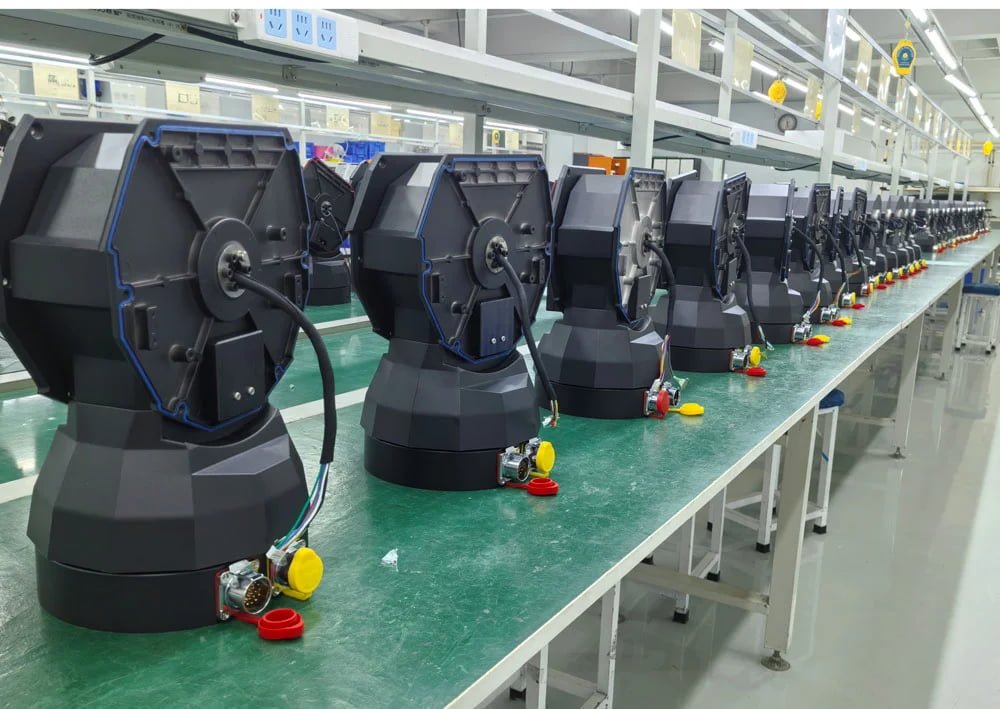
FAQ
What makes a rugged PTZ camera different from a standard outdoor PTZ camera?
A rugged PTZ camera is selected for environments where ingress protection alone is not enough. IEC 60529 covers solids and water ingress, but not corrosion, icing, solar radiation, or condensation. In practical deployments, rugged designs often add anti-corrosion construction, stabilization, weather accessories, and stronger integration or lifecycle support requirements.
Is an IP67 PTZ camera enough for a coastal surveillance camera project?
Not always. An IP67 PTZ camera may be appropriate for ingress protection, but coastal work often also needs corrosion-resistant materials or coatings, protected connectors, better cable routing, and maintenance planning. NEMA 4X-style thinking is often relevant in North American procurement because it adds corrosion language beyond basic ingress.
When does thermal plus visible imaging make sense?
Thermal plus visible becomes more valuable when the site has darkness, glare, smoke, fog, or mixed visibility and the operator still needs scene context. Current bispectral and multispectral security platforms are positioned around exactly that division of labor: thermal for detection resilience, visible for recognition and context.
Why does ONVIF or VMS compatibility matter in rugged PTZ procurement?
Because a rugged camera can still create cost and delay if it does not fit the VMS/NVR environment. ONVIF states that its IP-video profiles cover core interoperability functions such as video streaming and PTZ-related functions, which helps cameras and clients work together across vendors.
What documents matter before issuing a purchase order?
For project work, teams often need more than a quote. Common requirements include datasheets, mechanical references, interface/protocol notes, certification files, and any compliance or cybersecurity-related support documents required by the end user. NIST notes that non-technical supporting capabilities and documentation can materially affect whether a connected device can be approved and integrated.