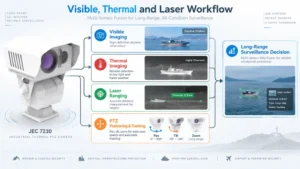
Choose a cooled or uncooled thermal camera by the surveillance task it can demonstrate, then check whether its power, startup and maintenance requirements fit the site. A cooled design deserves consideration when its imaging performance justifies those obligations. An uncooled configuration is a valid choice when it meets the same operational requirement. Neither label proves range. Before requesting prices, define the target, required detail, field of view and conditions under which the camera must work.
What Cooling Changes
A cooled thermal camera uses a cryocooler to lower detector temperature and reduce thermally induced noise. This can improve sensitivity, but adds cooling hardware and associated power, packaging and service considerations. An uncooled detector operates without cryogenic cooling; the complete camera still needs electrical power and thermal management. Teledyne FLIR explains these architecture trade-offs.
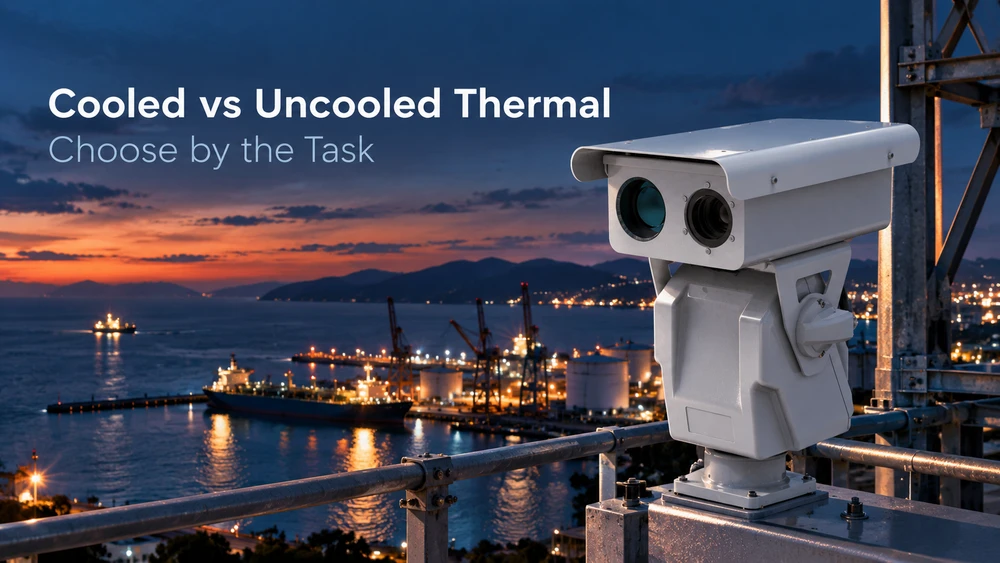
Keep spectral band separate from cooling architecture. MWIR and LWIR describe wavelength ranges, not whether a detector is cooled. Check both attributes in the proposed specification rather than assuming a pairing.
| Decision factor | Cooled proposal | Uncooled proposal |
|---|---|---|
| Imaging | Demonstrate the capability that warrants cooling. | Demonstrate the required task, including difficult scenes. |
| Power and readiness | Document cooling, startup and operating states. | Document startup, stabilization and operating states. |
| Installation | Include cooler and optics in assembly checks. | Check the complete assembly, not detector size alone. |
| Support | Confirm cooler service and repair responsibilities. | Confirm camera and PTZ maintenance requirements. |
Start with the Target, Not the Distance Claim
“Long range” is incomplete without a task. Detecting an object, recognizing its class and identifying specific details are different requirements. Write down which decision the operator must make at each observation point, and whether thermal imagery supplies that decision or cues a visible camera.
For each proposal, request detector format, pixel pitch, lens configuration and field of view at the required setting. Equal focal lengths do not establish equal scene coverage when detector geometry differs. A narrow view that supplies detail may also leave too little coverage for the intended search task.
Use the long-range EO/IR selection guide to structure those requirements. Assess the complete optical configuration rather than converting a detector label or zoom ratio into a promised distance.
Video: Long-Range Thermal EO/IR PTZ System
Application footage only. Compare cooled and uncooled configurations using documented test conditions and the required surveillance task.
Include Difficult Scene Conditions
Specify backgrounds, target movement and the periods when target-to-background thermal contrast may be weak. For coastal surveillance requirements, record visibility, weather and the observation path during demonstrations. A clear-night clip does not establish performance in sea mist.
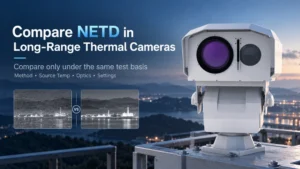
NETD describes thermal sensitivity, not guaranteed surveillance range or temperature-measurement accuracy. Ask for its test conditions, then evaluate usable imagery. Neither architecture guarantees visibility through all fog or rain.
Decide What Would Justify Cooling
If a proposed uncooled system cannot distinguish the required target from its background, ask the supplier to identify the limiting factor before changing architecture. Insufficient image detail, unsuitable coverage and weak thermal contrast are different problems. Request evidence showing which limitation the alternative configuration addresses. Conversely, when an uncooled proposal already meets the task, ask what additional operational result a cooled proposal would deliver. Compare that result with the extra installation and support commitments.
Check the Complete PTZ Installation
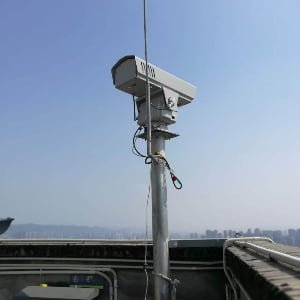
Request startup, steady-operation and peak power requirements for the quoted system, including cooling, heaters, electronics and PTZ movement where fitted. Define “ready” as usable imagery and required control functions, not merely a successful network connection. Ask what happens after an interruption and whether the operating schedule accommodates recovery.
Review the moving assembly’s mass, mounting arrangement, cable routing and interfaces. Detector choice does not establish pointing accuracy, tracking behavior or stabilization. For OEM projects, resolve the thermal module integration requirements before approving the platform.
JEC’s long-range EO/IR PTZ product page provides a relevant configuration-discussion starting point; confirm available detector options directly. A laser rangefinder measures distance. It does not establish thermal detection, recognition or identification performance.
Price the Operating Plan
Compare purchase price alongside installation, power provision, scheduled service, spares, repair logistics and expected downtime. For cooled proposals, obtain the specific cooler’s support requirements and the basis of any operating-life statement. Do not transfer another manufacturer’s maintenance interval into the project budget.
Uncooled does not mean maintenance-free. Ask which camera, optics and positioning components require attention, who performs the work and how access is arranged. Use the same operating schedule and support assumptions when you compare complete thermal PTZ quotations.
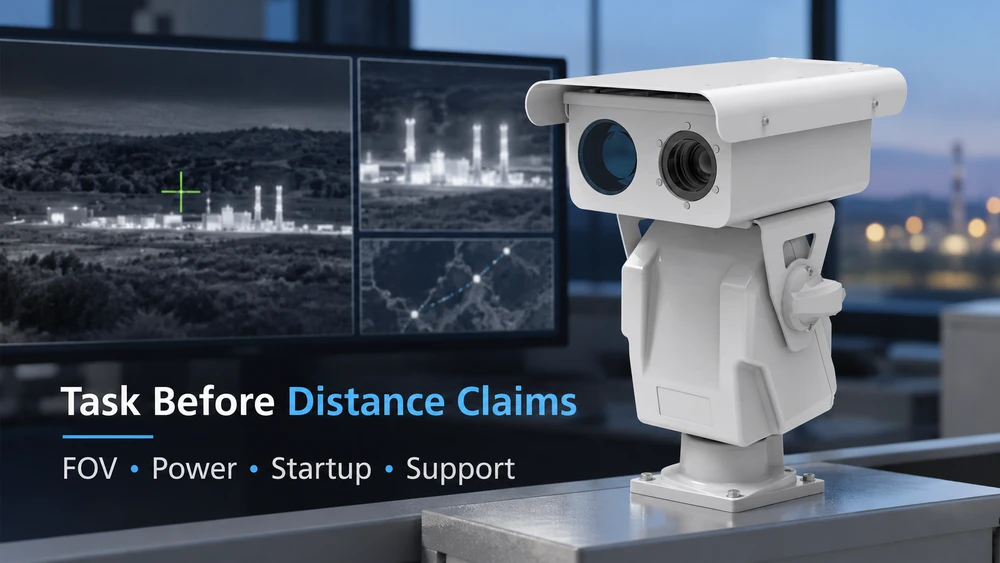
Require Evidence Before Approval
Record the detector, lens, firmware, processing settings and output used in each demonstration. Where proposals use different fields of view or processing, document the differences. Otherwise, a side-by-side display can conceal why one image appears more useful.
- Test representative targets at the required observation points and settings.
- Record conditions, target movement and the operator’s actual decision.
- Check startup, recovery, video delivery and required control functions.
- Agree pass/fail criteria, exceptions and review responsibility before testing.
A factory demonstration supports configuration review; site acceptance checks the installed system under the agreed local conditions. Follow the long-range image-quality acceptance tests for the detailed procedure. Keep a results record linking each requirement to its configuration, conditions, outcome and unresolved limitation.
Make the RFQ Comparable
Send both suppliers the same requirement sheet. Include target type and dimensions, observation distance, task, required coverage, installation environment, available power, control platform and quantity. State whether the system runs continuously or starts after an alarm, and identify acceptable maintenance windows.
Request a response separating standard equipment, options and exclusions. Each supplier should identify the proposed detector and optics, explain assumptions behind performance statements, and list requirements that remain unresolved. Specify whether supporting evidence comes from a calculation, a factory demonstration or an installed-site test; these records answer different questions. Keep those distinctions in the purchase specification so an estimated result does not become an undocumented acceptance promise.
Frequently Asked Questions
Is a cooled thermal camera always better for long-range surveillance?
No. Its capabilities must justify the installation and support obligations. Select against the required imaging task and demonstrated result, not the architecture’s reputation.
Are MWIR and LWIR the same as cooled and uncooled?
No. They describe spectral bands. Cooling describes detector operation. Teledyne FLIR’s thermal imager selection guidance discusses these attributes; verify the actual proposed combination.
Can an uncooled thermal PTZ camera meet a long-range requirement?
Potentially. The answer depends on the target, optics, detector, scene and required detail. Request evidence for that configuration instead of accepting a generic distance claim.
What maintenance should buyers ask about for a cooled camera?
Ask for cooler-specific service requirements, operating-hour definitions, warranty conditions, repair arrangements and spares. Have the supplier identify which obligations belong to the buyer.
What should accompany a thermal camera quotation?
An exact configuration, target and field-of-view assumptions, power and startup requirements, support scope, limitations and proposed acceptance evidence. Product labels alone are insufficient.
The purchase decision rests on a demonstrated task and an operating plan the site can support. Define the required image first, compare complete configurations, then agree how the result will be verified. Review the JEC thermal PTZ camera range as a product-discovery step, not proof of a particular cooled option.
Submit your thermal surveillance requirements with target type, task and distance, field of view, installation environment, power supply, control platform, operating schedule and quantity. Ask which available configuration and supporting evidence fit the project.