Why Distance Matters in Long-Range Surveillance
In border, coastal, port, and critical infrastructure projects, seeing a target is only part of the job. Operators often need to answer a more practical question: how far away is the target?
A visible PTZ camera may provide zoomed video. A thermal PTZ camera may help detect a heat signature in low-light or difficult weather conditions. But for long-distance surveillance, visual confirmation alone may not be enough. Distance information can help the control room understand whether the target is approaching, crossing a restricted zone, moving toward a protected asset, or staying outside the monitored boundary.
This is where a laser rangefinder camera becomes valuable. By combining EO/IR imaging, PTZ control, and laser ranging, the system helps project teams move from “we can see something” to “we can verify where it is, how far away it is, and how the event should be documented.”
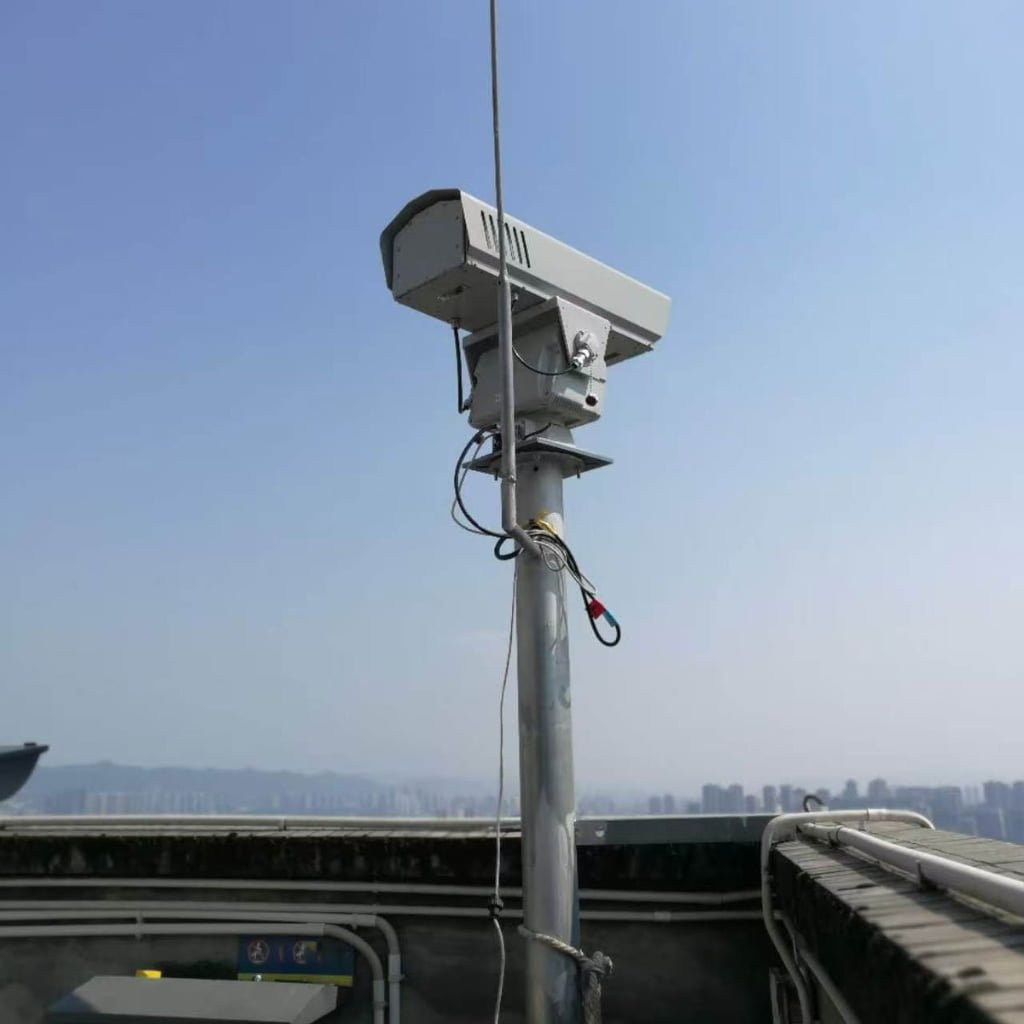
For JEC’s target buyers — border surveillance contractors, coastal surveillance integrators, critical infrastructure security teams, and industrial project buyers — this topic matters because it avoids ordinary PTZ price competition. A laser rangefinder PTZ is not just a camera with zoom. It is a target verification tool for long-range projects.
What a Laser Rangefinder Camera Adds to EO/IR Surveillance
A standard PTZ camera supports pan, tilt, zoom, and video monitoring. An EO IR camera combines visible imaging and thermal imaging for day/night observation. A laser rangefinder adds one more layer: distance measurement.
In real projects, this can improve decision-making in several ways:
| Project Need | Standard PTZ Camera | Thermal PTZ Camera | Laser Rangefinder Camera |
|---|---|---|---|
| See a distant object | Yes | Sometimes, depending on visibility and target heat | Yes, with visible or thermal channel support |
| Detect in low light | Limited | Stronger | Stronger when combined with thermal |
| Confirm target distance | No | No | Yes, depending on selected model and conditions |
| Support event reporting | Video only | Thermal/visible video | Video plus measured distance |
| Assist control-room judgement | Visual information | Detection and visual awareness | Distance-based verification support |
A target verification camera with laser ranging is especially useful where operators need measurable information, not only video images.
Where Laser Rangefinder PTZ Cameras Help Most
A laser rangefinder PTZ is not necessary for every surveillance site. For a small factory gate or short-distance perimeter, a normal PTZ camera may be enough. But in wide-area and long-distance projects, the value becomes much clearer.
1. Border Surveillance
Border surveillance projects often involve long fence lines, open terrain, patrol roads, and distant moving targets. A control-room operator may see a person, vehicle, or object through thermal or visible imaging, but without distance information, the event may remain unclear.
A long range surveillance camera with laser rangefinder support can help verify whether the target is near a restricted line, approaching a patrol zone, or still outside the response area.
2. Coastal and Maritime Monitoring
In coastal surveillance, distance judgement can be difficult because targets may move across open water with few visual reference points. A small vessel, floating object, or moving target may appear on video, but operators may need distance information before deciding whether it is relevant.
For coastal projects, an EO IR camera with thermal imaging, optical zoom, and laser ranging can support day/night target verification, especially when visibility changes due to haze, glare, rain, or low light.
3. Critical Infrastructure Protection
Power stations, oil and gas facilities, transportation corridors, water facilities, and industrial parks often require clear event documentation. If an alarm is triggered near a perimeter or remote asset, the operator needs to know whether the target is within a response zone.
A laser rangefinder camera can add measurable context to the event record, making it easier to support control-room decisions and incident review.
4. Long-Distance Industrial Monitoring
Some industrial projects require monitoring across large outdoor areas, mountain roads, pipelines, rail corridors, or remote work zones. In these environments, distance information helps teams understand the scale and location of the event more accurately.
Typical Workflow: Thermal Detection, Visible Verification, Laser Ranging
A laser rangefinder camera works best as part of a complete EO/IR workflow. It does not replace thermal imaging or visible zoom. It improves the verification process by adding distance data.
| Step | System Function | Operator Value |
|---|---|---|
| 1. Wide-area observation | PTZ patrols or monitors a selected zone | Keeps awareness across a large scene |
| 2. Target detection | Thermal or visible imaging finds a target | Helps locate potential activity |
| 3. Zoom verification | Visible camera zooms in for detail | Supports visual confirmation |
| 4. Distance measurement | Laser rangefinder measures target distance | Adds measurable target information |
| 5. Event recording | VMS/NVR records video and event data | Supports review, reporting, and handover |
| 6. Decision support | Operator compares distance, location, and site SOP | Improves control-room judgement |
This workflow is useful for border, coastal, oil and gas, utility, transportation, and critical infrastructure projects where operators need more than a clear picture.
Why Long-Distance Identification Needs More Than Zoom
Many buyers first ask about zoom range. Zoom is important, but it does not solve every long-distance problem.
At longer distances, image quality can be affected by haze, vibration, heat shimmer, lighting, target size, background contrast, lens configuration, and installation height. A higher zoom number does not automatically mean better target verification.
A better question is:
What information does the operator need to make a decision?
For some projects, the answer may be visual detail. For others, it may be detection in darkness. For border and coastal projects, it may be long-distance identification supported by target distance measurement.
That is why a laser rangefinder PTZ can be more valuable than a standard high-zoom PTZ in the right project. It gives the operator both visual context and distance information.
Laser Rangefinder PTZ vs Standard PTZ
| Selection Factor | Standard PTZ Camera | Laser Rangefinder PTZ |
|---|---|---|
| Best for | General surveillance, short-to-medium range monitoring | Long-distance target verification |
| Main value | Pan, tilt, zoom, visual monitoring | EO/IR imaging plus distance confirmation |
| Use case | Factory gate, building perimeter, city surveillance | Border, coastal, port, oilfield, critical infrastructure |
| Operator output | Video image | Video image plus distance data |
| Project value | Cost-effective monitoring | Higher-value verification workflow |
| Procurement focus | Resolution, zoom, price | Sensor mix, ranging requirement, integration, documentation |
Not every project needs a laser rangefinder camera. But when distance confirmation affects the operator’s decision, project documentation, or event response, it becomes a valuable part of the system design.
JEC PTZ Product Fit for Laser Rangefinder Camera Projects
JEC’s website already positions the company around integrated PTZ and thermal imaging systems, including thermal PTZ cameras, long-range PTZ cameras, EO/IR systems, AI tracking PTZ cameras, and laser rangefinder PTZ systems. The homepage also describes laser rangefinder PTZ cameras as systems for long-distance target verification and specialized surveillance applications where distance confirmation is required.
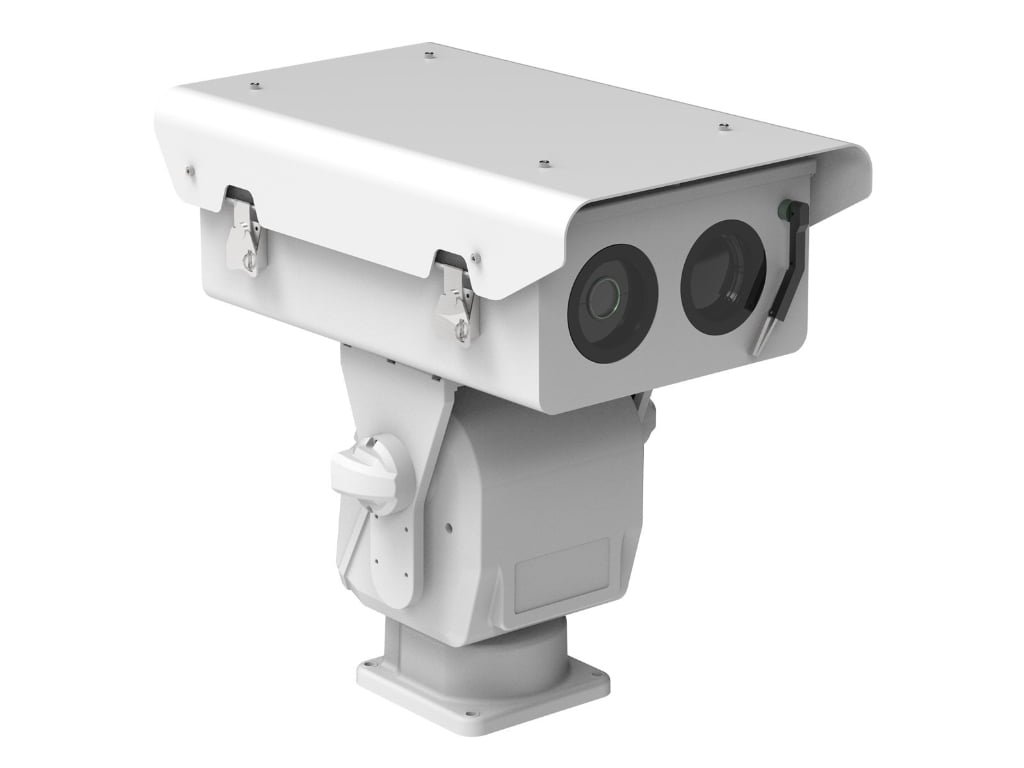
JEC’s Multi-Sensor Thermal PTZ Camera with Laser Rangefinder and GPS is relevant to this topic because it combines visible imaging, thermal imaging, laser ranging, and GPS-related capability depending on configuration. The product page highlights long-range monitoring with visible, thermal, and ranging support, direct-drive pan-tilt control, 55x optical zoom, thermal-visible situational awareness, system integration features, and IP66 outdoor protection.
For project-based buyers, JEC PTZ should not be viewed only as a camera supplier. The more useful role is configuration support: helping the buyer define the correct EO/IR + PTZ + laser rangefinder platform based on monitoring distance, target type, mounting conditions, environmental exposure, VMS/NVR integration, API/protocol requirements, OEM/ODM needs, and procurement documentation.
System Integration: Why Distance Data Should Fit the Control Room
A laser rangefinder camera is most useful when its output fits the project workflow. In B2B surveillance projects, the camera may need to connect with VMS, NVR, command platforms, alarm systems, radar, thermal analytics, or patrol software.
Before procurement, project teams should confirm:
| Integration Item | Why It Matters |
|---|---|
| VMS/NVR compatibility | Operators need recording, playback, and central management. |
| ONVIF / RTSP support | Helps with mainstream platform integration. |
| API or protocol documentation | Important for customized system linkage. |
| PTZ control interface | Needed for joystick, software, or automatic control. |
| Alarm input/output | Supports perimeter or sensor-triggered workflows. |
| Distance data handling | Determines whether ranging information can support reporting. |
| Technical documents | Required for bidding, review, installation, and acceptance. |
Procurement Checklist for Laser Rangefinder Camera Projects
| Question | Why It Matters |
|---|---|
| What is the target type: person, vehicle, vessel, drone, or object? | Target size affects detection and ranging expectations. |
| What is the required observation distance? | Determines lens, thermal module, and ranging requirements. |
| Is the site border, coastal, port, oilfield, or infrastructure? | Affects environmental protection and mounting design. |
| Is thermal imaging required? | Important for night, haze, smoke, or low-visibility conditions. |
| Is visible zoom enough for identification? | Helps determine the optical configuration. |
| Is laser ranging required for every event or only selected targets? | Influences workflow and operator procedures. |
| What VMS/NVR or control platform will be used? | Reduces integration risk. |
| Are API, ONVIF, Pelco-D, or other protocols needed? | Important for system integrators. |
| What documents are required before purchase? | Datasheets, CAD files, certificates, and protocol documents may be required. |
| Is OEM/ODM customization required? | Important for project contractors and brand partners. |
Do not select a laser rangefinder PTZ only by maximum range claims. Ranging performance depends on target size, target reflectivity, weather, visibility, background, installation height, system configuration, and test conditions. Model-specific data should always be confirmed before final project selection.