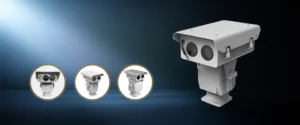
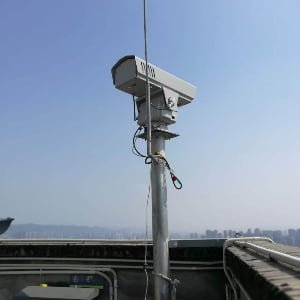
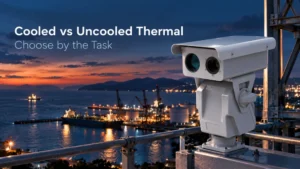
A request for 2km, 3km, 4km or 6km surveillance is a starting point, not a camera specification. Define the target, the detail an operator must see, day and night conditions, and how the system will be tested before choosing the optics or PTZ platform.
A long-range PTZ camera may detect a vehicle at a distance where it cannot show enough detail to identify a person. The difference matters in border, coastal and industrial security projects, where a distance claim alone says little about what an operator can actually do.
Border surveillance, coastal monitoring, industrial perimeter security, airports and critical infrastructure sites also differ in target movement, visibility and response workflow. The camera configuration should follow those site requirements, not just the farthest point on a drawing.
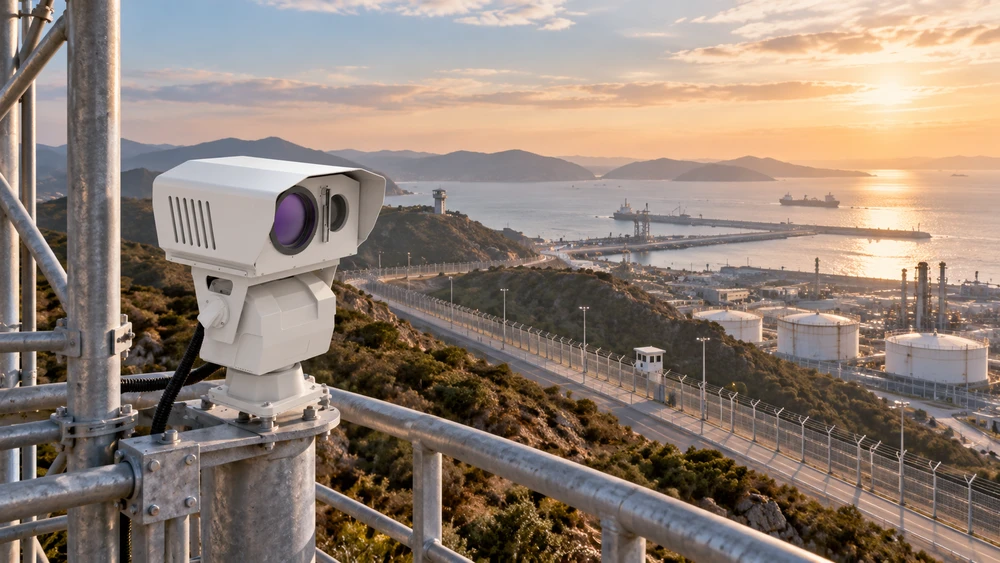
Distance Is Only the Starting Point
Many RFQs begin with “We need a 3km PTZ camera” or “Please recommend a 6km camera.” The next question is what must be seen at that distance. A person, vehicle, vessel, fence line and facility present different imaging tasks.
| Buyer request | What to clarify | Why it matters |
|---|---|---|
| 2km surveillance | Person, vehicle, gate, road or facility? | Target size affects the sensor and lens choice. |
| 3km night monitoring | Thermal awareness, visible detail or both? | Daytime and nighttime results must be judged separately. |
| 4km observation | Detection, recognition or identification? | Seeing movement is not the same as confirming a target. |
| 6km PTZ camera | Detection, verification, tracking or ranging? | The task determines the field of view, PTZ behavior and test method. |
Detection, Recognition and Identification Are Different
In a long-range project, “see” can mean several things. One operator needs to notice movement; another needs to tell a person from a vehicle; a third needs finer visual detail. Put the required outcome in the RFQ.
- Detection: establish that a target is present.
- Recognition: distinguish its general type, such as person, vehicle or vessel.
- Identification: obtain the specific detail required by the project’s operating procedure.
- Verification: decide whether the observed event calls for a response.
This distinction is important when assessing a long-range thermal PTZ camera. Thermal imagery can help locate a target, but visible zoom may still be needed for detailed confirmation when light and visibility permit.
Thermal Lens DRI Reference for Long-Range Projects
A thermal lens focal length is not, by itself, a reliable detection, recognition or identification distance. Treat any DRI table as a starting estimate until you know the test method, target dimensions, sensor configuration and environmental assumptions behind it.
For a proposed thermal module, request the supplier’s DRI basis and sample imagery for the actual target and scene. Check whether quoted distances describe a person or vehicle, what probability or image criterion is used, and whether the result is a calculated estimate or a field test. Weather, thermal contrast, mounting movement and image processing can change the outcome.
Keep the thermal and visible results separate in the review. A thermal image that establishes target presence does not necessarily provide the visible detail needed for a response decision. Conversely, a visible channel with strong daytime detail may be of limited use after dark without suitable lighting.
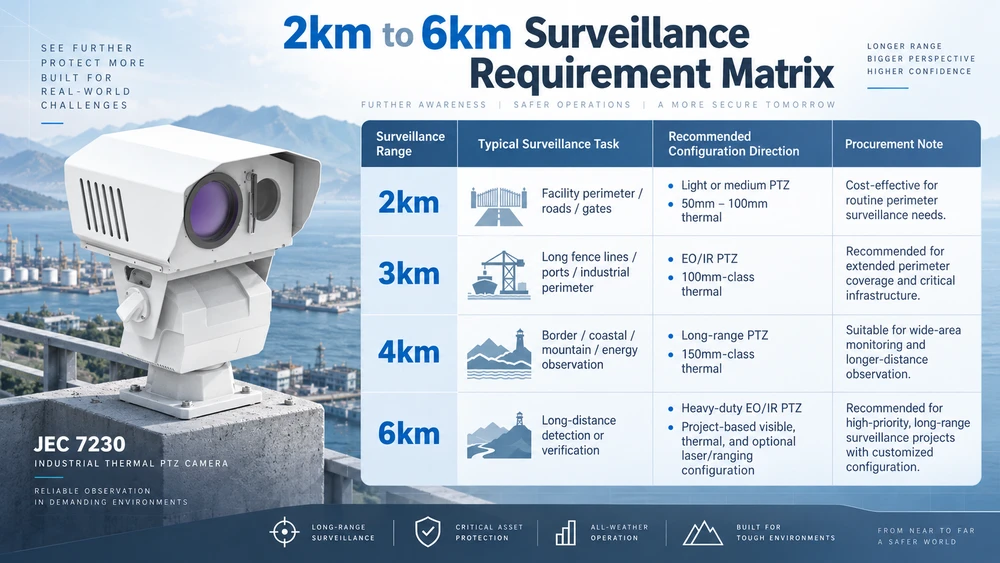
2km-6km Surveillance: JEC Configuration Direction
Treat 2km-6km as a set of project requirements, not fixed model labels. Start with the task at the farthest required point, then work back through the visible and thermal channels, PTZ support and mounting conditions. Do not map a distance band to a particular thermal lens before reviewing the sensor and target.
| Project range | Typical task | Question for configuration review |
|---|---|---|
| Around 2km | Perimeter, road, gate or vehicle observation | Is visible detail required, or is nighttime detection the main task? |
| Around 3km | Long fence line, port or remote facility monitoring | How will a thermal alert be verified by the operator? |
| Around 4km | Border, coastal or infrastructure observation | Can the mount and PTZ hold a narrow field of view in site conditions? |
| Around 6km | Detection or verification of specified distant targets | Which target and detail level must pass the acceptance test? |
The ranges in this table are project examples, not model recommendations. Final selection still needs a proposed sensor and lens combination, site-specific samples where possible, and an agreed pass/fail task.
How JEC PTZ Platforms Fit Different Distance Ranges
Platform selection follows the payload and installation, not the headline range. A compact installation, an integrated EO/IR assembly and a heavier multi-sensor payload place different demands on the pan-tilt mechanism. Ask for the assembled payload mass and balance, mounting drawing, cable route and control requirements before comparing platforms.
| Platform direction | Configuration question | Project fit to review |
|---|---|---|
| Compact PTZ | Will the selected optics and enclosure fit within the payload and space limits? | Mobile, robotic or space-constrained installations |
| Light PTZ | Can the platform carry and steady the proposed visible and thermal assembly? | Perimeter, road and facility monitoring |
| Integrated EO/IR PTZ | Are the sensors aligned, and can operators switch between them as intended? | Long fence lines, ports and remote sites |
| Heavy-duty EO/IR PTZ | What are the assembled payload, wind exposure and mounting demands? | More demanding long-distance or multi-sensor installations |
Review JEC’s long-range EO/IR PTZ camera product page as one configuration reference. Confirm the exact visible, thermal and optional laser payload in the quotation; a product-family page does not establish performance for every variant.
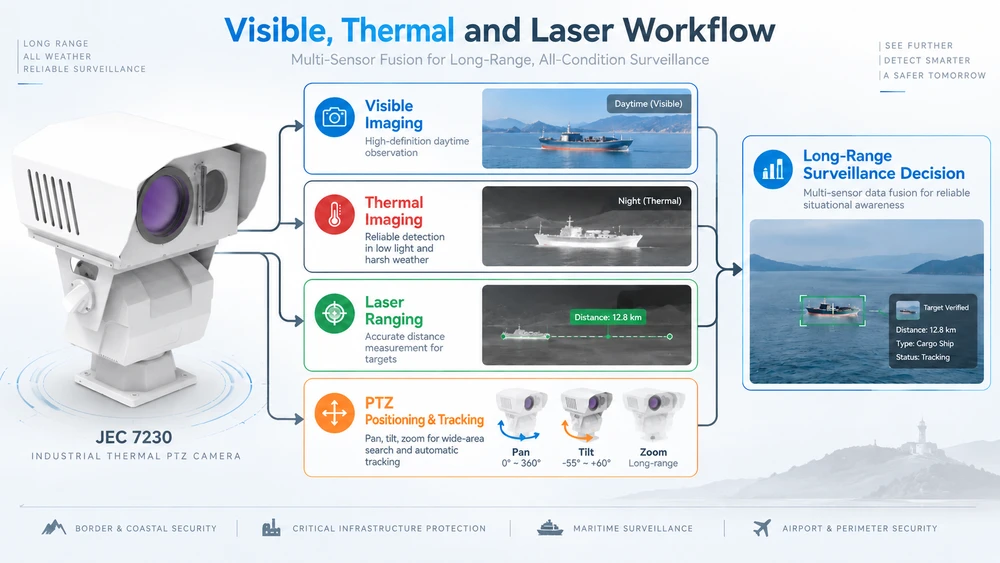
Visible Zoom, Thermal Imaging and Laser Functions
These functions answer different operator questions. Specify the job of each channel before deciding whether a multi-sensor system is needed.
| Function | Main purpose | Buyer question |
|---|---|---|
| Visible zoom | Review scene detail when visibility allows | What detail must be visible at the required distance? |
| Thermal imaging | Find targets by thermal contrast | What target and background conditions must be tested? |
| EO/IR dual-sensor system | Use thermal and visible views in one workflow | How will an operator move from detection to confirmation? |
| Laser rangefinder | Measure distance to a selected target | Is measured distance needed in the control-room record? |
| Laser or IR illumination | Add light for a compatible visible channel | Is the requirement illumination, ranging or thermal awareness? |
Laser illumination and laser ranging are not interchangeable. If a rangefinder is proposed, clarify where its distance data will appear and how the operator will use it. JEC’s article on long-distance target verification with laser ranging covers that workflow in more detail.
Why PTZ Stability Matters at 4km and 6km
At a narrow field of view, small movement can make an image hard to use. Strong optics will not compensate for a mount that vibrates or a PTZ that takes too long to settle after a preset move.
Check low-speed control, preset repeatability, settling time, payload balance, cable movement, tower stiffness and wind exposure. Ask to see the assembled system stop and hold position at the intended zoom, ideally on a mounting structure representative of the site.
RFQ Checklist for 2km-6km Long-Range PTZ Projects
A useful quotation starts with the observation task and the site. Include:
- Application and target type: person, vehicle, vessel, facility or another specified object
- Required outcome at each distance: detection, recognition, identification, verification or ranging
- Day/night conditions and whether visible, thermal or both channels are required
- Mounting location, wind and vibration exposure, and environmental conditions
- VMS or control platform, video streams, PTZ control and alarm workflow
- Required datasheets, drawings, interface documents and acceptance criteria
- Sample, pilot and batch quantities, plus any OEM/ODM requirements
- Whether tracking, preset patrols or manual joystick control will be used
- Whether any laser function means illumination, range measurement or both
- Who will witness the factory and site acceptance tests
Where JEC Long-Range EO/IR PTZ Cameras Fit
A 2km perimeter and a 6km coastal observation point may need different optics, payloads and mounting arrangements. For a coastal site, also consider how the camera will work with the wider coastal surveillance system, including the operator’s detection and handover process.
JEC can discuss long-range visible and thermal configurations with system integrators, contractors and OEM buyers. The useful comparison is the proposed configuration against a stated target, site and test, not one camera’s advertised distance against another’s.
This applies to fixed perimeter installations as well as border, port, coastal and remote infrastructure observation. Depending on the task, the discussion may cover a visible-only camera, a thermal and visible assembly, or a multi-sensor payload with distance measurement. The quotation should name the selected configuration rather than assume every option is included.
Long-Range EO/IR PTZ Camera Video
Use the video to inspect the demonstrated configuration and PTZ movement. Confirm which functions shown are included in the model quoted for your project.
FAQ
What type of PTZ camera is suitable for 2km surveillance?
It depends on the target and task. A visible-zoom PTZ may suit a daytime overview; night detection or verification may call for thermal or dual-sensor imaging. Ask for sample imagery against your required target.
Can one PTZ camera monitor 6km clearly?
That depends on target size, optics, atmosphere, mounting stability and what “clearly” means in the acceptance test. Detection at 6km does not establish identification at 6km.
Is visible zoom enough for night surveillance?
Only if available light or planned illumination supports the required detail. Thermal imaging may help find targets in darkness, but its result also depends on target-to-background contrast.
What is the difference between detection, recognition and identification?
Detection establishes presence, recognition distinguishes a general target type, and identification requires the specific detail defined by the project. Put that distinction in the RFQ and acceptance test.
When should buyers consider thermal PTZ instead of visible-only PTZ?
Consider it when night detection or low-light awareness is required. Keep the visible channel in the evaluation if operators must confirm details that thermal imagery cannot show.
Does “laser” mean illumination or a rangefinder?
It could mean either. Illumination adds light for imaging; a rangefinder measures distance. Specify the required function and its output.
What should I send when requesting a 2km-6km PTZ quote?
Send the target, distance, required detail, day/night conditions, mounting and environmental details, integration needs and the proposed acceptance criteria.
Conclusion
Distance alone cannot select a long-range PTZ camera. Define the target and operator task, ask for configuration-specific imaging evidence, and test the complete system under relevant mounting and site conditions. That is the basis for comparing 2km-6km proposals.
Request a 2km-6km Long-Range PTZ Configuration Review
Send JEC your target types, observation distances, day/night requirements, mounting conditions and integration platform. Include the detail level you need at each distance so the proposed visible, thermal and PTZ configuration can be reviewed against it.