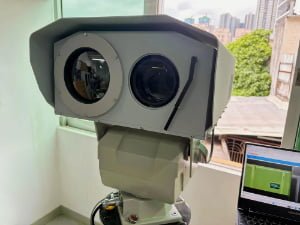
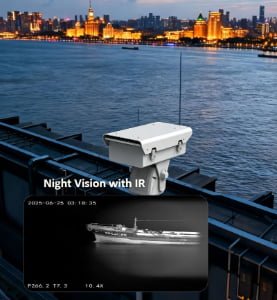
For critical infrastructure projects, a long range surveillance camera should be selected according to the protected asset, target type, observation task, lighting conditions, site layout, mounting height, VMS integration, environmental exposure, and maintenance plan. For many projects, the most practical configuration is not one camera with the longest advertised range, but a balanced system using a thermal PTZ camera, visible zoom, stable pan-tilt control, and project-based integration support.
Critical infrastructure sites do not behave like ordinary commercial buildings. A power substation, oil and gas facility, transportation hub, water plant, communication tower, port perimeter, or remote industrial site may have long fence lines, low-light zones, blind corners, harsh weather, and limited on-site maintenance access. A camera that looks good in a catalog may still fail the project if the lens, mounting, network, or control workflow is not matched to the real site.
This guide is written for security integrators, distributors, OEM/ODM buyers, and project contractors who need to evaluate long-range PTZ and EO/IR camera systems for critical infrastructure security projects.
Start With the Asset, Not the Camera Model
The first question should not be “Which camera has the longest range?” A better starting point is: “What asset are we protecting, and what decision should the operator make from the video?”
Critical infrastructure projects often include different protection zones:
- Outer perimeter fences and gates
- Open yards, tank farms, switchyards, or storage areas
- Access roads and vehicle checkpoints
- Control rooms, substations, pump stations, and tower bases
- Coastal or river-facing boundaries
- Remote equipment areas with limited lighting
Each zone may require a different camera role. One camera may provide wide-area thermal awareness, another may support visible zoom confirmation, while fixed cameras may cover gates or short-range blind spots. A professional design normally combines several layers instead of relying on one device to solve every problem.
Define Detection, Recognition, Identification, and Verification
Many RFQs use the word “detection” loosely. In a project discussion, detection, recognition, identification, and verification should be separated.
- Detection: The system indicates that a target or abnormal event may exist.
- Recognition: The operator can roughly understand target type, such as person, vehicle, boat, or animal.
- Identification: The operator needs more detail for a specific decision, depending on site rules and image quality.
- Verification: The camera helps confirm whether an alarm is real, false, authorized, or requires response.
A long range PTZ camera may support different tasks depending on thermal lens, visible zoom, target size, weather, installation height, and operator workflow. Avoid writing only “need 5 km detection” or “need 10 km camera” unless the target, environment, and performance criteria are also defined. Exact distances should be confirmed through project-based evaluation and product datasheets.
Choose Thermal Imaging for Night and Low-Visibility Awareness
Thermal imaging is valuable in critical infrastructure because many incidents happen outside normal lighting conditions. A thermal channel can help operators observe heat signatures at night, around fence lines, near vegetation, or in low-visibility environments where visible cameras may struggle.
However, thermal imaging should not be treated as a universal replacement for visible video. In many projects, thermal imaging is used to detect or locate a target, while visible zoom supports operator confirmation when lighting, weather, and distance allow.
When evaluating a thermal configuration, integrators should clarify:
- Target type: person, vehicle, boat, animal, or equipment hotspot
- Observation zone width and expected field of view
- Whether wide-area awareness or narrow long-distance observation is more important
- Thermal lens options suitable for the site
- Whether the thermal channel needs to be recorded by the VMS
- Whether alarm verification, patrol mode, or auto-tracking is required
For B2B procurement, ask the supplier to recommend the thermal lens based on the site layout rather than choosing only from a model list.
Use Visible Zoom for Confirmation and Operator Detail
An EO/IR PTZ camera combines electro-optical visible imaging and infrared thermal imaging in one PTZ system. This type of configuration can be useful when the project needs both thermal awareness and visible confirmation.
Visible zoom is especially important for:
- Checking whether a target is a person, worker, vehicle, animal, or authorized patrol team
- Reviewing incidents in areas with lighting support
- Supporting command center decisions after a thermal or radar alarm
- Providing visual information to operators, guards, or response teams
Do not evaluate visible zoom only by the zoom number. Long-distance visible imaging can be affected by atmosphere, vibration, mounting stability, focus behavior, lighting, and heat shimmer. For critical infrastructure sites, a stable mount and practical observation workflow may matter as much as the optical specification.
Match the PTZ Platform to the Surveillance Workflow
The PTZ platform controls how quickly and accurately the camera can move between zones. For a substation, oil depot, industrial perimeter, or transport hub, this affects daily operation.
Project buyers should ask:
- How many preset positions are required?
- Will the camera run scheduled patrols?
- Should alarms trigger automatic movement to a preset?
- Does the operator need manual control from the VMS?
- Will radar, fence sensors, or video analytics send target coordinates?
- Is auto-tracking needed for moving targets?
In some projects, pan-tilt speed is important. In others, preset accuracy, stability, and smooth operator control matter more. The right answer depends on the site workflow, not only the product datasheet.
Plan for VMS, Alarm, and Network Integration Early
For security integrators, integration questions should be discussed before the purchase order. A camera may have strong imaging performance but still create delays if it cannot communicate smoothly with the customer’s platform.
Include these questions in the RFQ:
- Which VMS, NVR, or command platform will be used?
- Is ONVIF, RTSP, SDK, API, or another control method required?
- Should the thermal and visible streams be displayed together?
- Can the VMS call PTZ presets and patrol routes?
- Will alarms trigger camera movement, recording, or pop-up video?
- Is the site using fiber, 5G, microwave, private network, or hybrid transmission?
The U.S. NIST video surveillance equipment guide emphasizes defining user requirements before selecting equipment, which is also a useful principle for modern industrial camera procurement. External reference: NIST Video Surveillance Equipment Selection and Application Guide.
Check Outdoor Protection and Installation Constraints
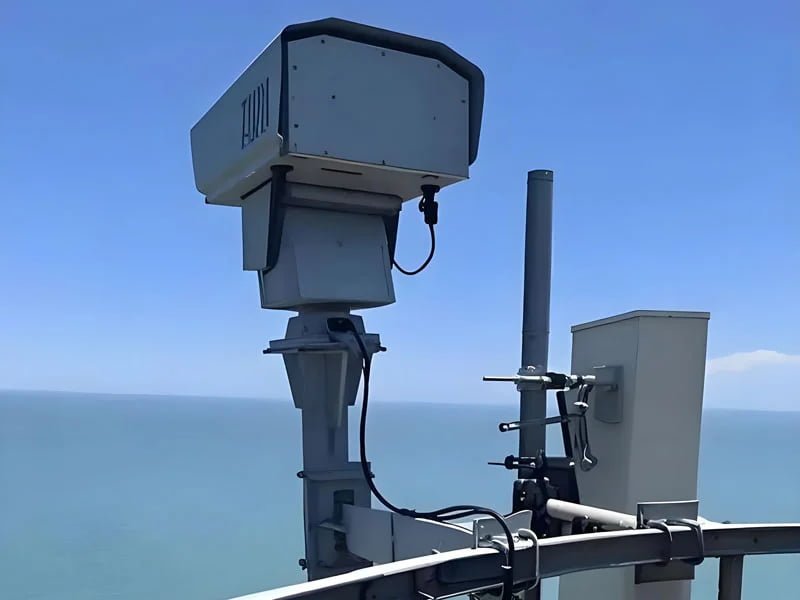
Critical infrastructure cameras are often installed on poles, towers, rooftops, tanks, substations, coastal structures, or remote perimeter points. The installation environment should be part of the specification from the beginning.
Buyers should clarify:
- Mounting method: pole, wall, tower, platform, or custom bracket
- Wind exposure and vibration risk
- Rain, dust, humidity, salt mist, or high-temperature exposure
- Power supply availability and backup plan
- Cable routing and lightning/surge protection requirements
- Maintenance access and spare parts plan
- Required enclosure protection level according to project conditions
For enclosure language, buyers can refer to IEC guidance on IP ratings, which is used to classify enclosure resistance against dust and liquids. External reference: IEC Ingress Protection ratings. Any specific IP rating, temperature range, or environmental test result should be confirmed from the exact product datasheet before publication or tender submission.
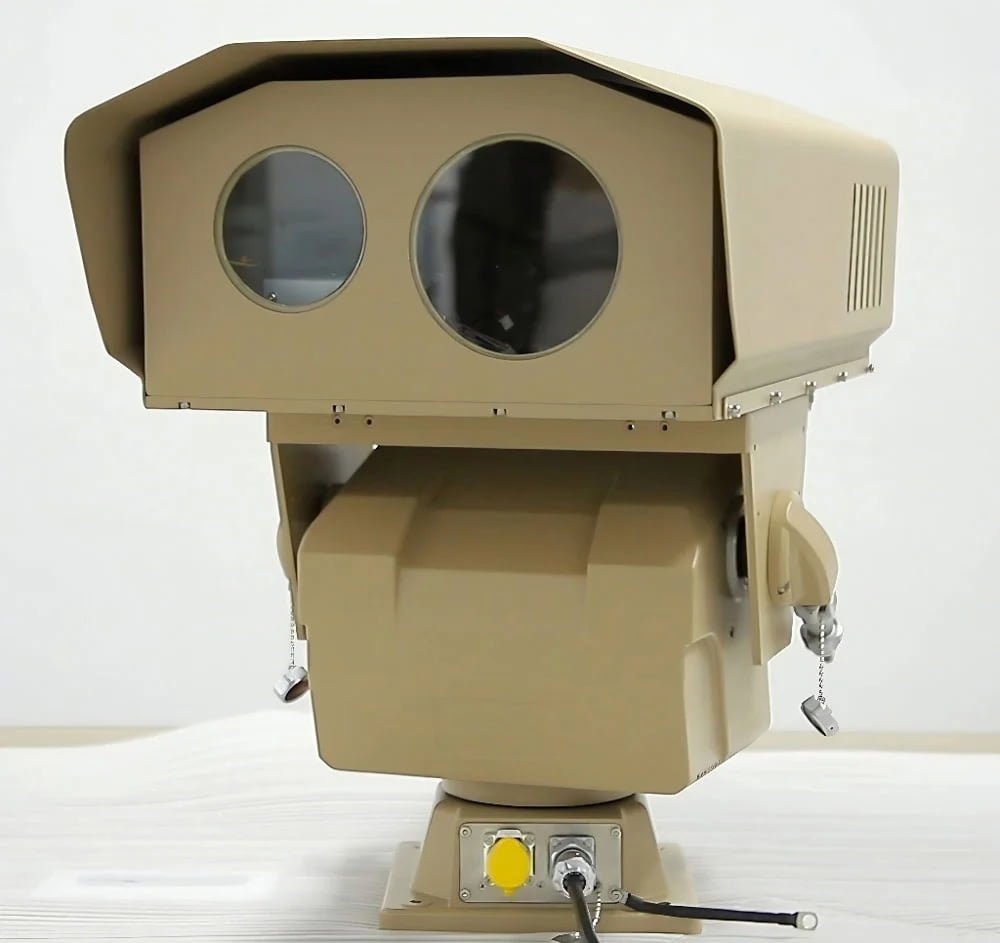
EO IR PTZ camera workflow for thermal detection and visible confirmation
Build a Practical RFQ Checklist
A useful RFQ for a critical infrastructure security project should give the supplier enough information to recommend a configuration instead of guessing from one keyword.
Project Information
- Facility type: substation, oil and gas site, water plant, port, transport hub, communication tower, or industrial site
- Country or region
- Site layout and key protection zones
- Number of camera points
- Expected project timeline
Observation Requirements
- Target type and size
- Expected observation distance range
- Detection, recognition, identification, or verification requirement
- Day/night operation requirement
- Lighting conditions and low-visibility concerns
Camera Configuration
- Thermal channel requirement
- Visible zoom requirement
- Thermal lens recommendation
- PTZ movement and preset requirements
- Optional laser rangefinder, GPS, or other payloads if required by the project
Integration and Documentation
- VMS or NVR platform
- ONVIF, RTSP, SDK, or API requirement
- Alarm input/output workflow
- Network transmission method
- Datasheet, user manual, drawings, and interface documentation
- Compliance documents required by the project
Where JEC Fits
JEC provides thermal imaging and PTZ camera solutions, long-range surveillance camera products, and critical infrastructure security solution pages for project buyers evaluating industrial surveillance systems. JEC’s public product category includes long-range EO/IR PTZ cameras, multi-sensor thermal PTZ cameras, laser rangefinder camera options, and heavy-duty pan-tilt platforms for project-based surveillance applications.
For a long-range critical infrastructure project, buyers can send JEC the facility type, target type, observation zone, mounting environment, integration platform, quantity, and OEM/ODM requirements. JEC can then discuss a suitable project-based thermal PTZ or EO/IR PTZ configuration for further technical review and quotation.
Recommended JEC Internal Links for Buyers
For project evaluation, buyers can review JEC’s long range surveillance camera category, thermal imaging and PTZ camera solutions, critical infrastructure security solution, thermal PTZ camera category, and contact page for project RFQ discussion.
Recommended Video Placement
Recommended JEC video: Thermal EO/IR PTZ Camera for USV Target Tracking | Coastal Surveillance
Recommended video type: a JEC product video showing EO/IR PTZ movement, thermal/visible imaging, target tracking, outdoor deployment, or platform integration. For this article, place the video after the section “Use Visible Zoom for Confirmation and Operator Detail” or after “Match the PTZ Platform to the Surveillance Workflow.”
FAQ
What is the best long range surveillance camera for critical infrastructure?
The best choice depends on the protected asset, target type, observation distance, lighting, weather, mounting height, VMS integration, and response workflow. Many projects use a combination of thermal imaging, visible zoom, and PTZ movement rather than relying on one single specification.
Should critical infrastructure projects use thermal PTZ cameras?
Thermal PTZ cameras can support night-time and low-visibility awareness for perimeter and remote asset monitoring. They are especially useful when operators need to detect heat signatures before using visible video for confirmation.
What is the difference between a thermal PTZ camera and an EO/IR PTZ camera?
A thermal PTZ camera uses thermal imaging with pan-tilt movement. An EO/IR PTZ camera usually combines thermal imaging and visible imaging in one PTZ platform, helping operators use thermal detection and visible confirmation together.
Can one camera cover an entire critical infrastructure site?
Usually not. Large sites often need a layered design with PTZ cameras, fixed cameras, perimeter sensors, lighting, access control, alarms, and a command platform. The correct design depends on site layout and protection priorities.
How should buyers write the RFQ for a long range surveillance camera?
The RFQ should include facility type, target type, observation task, expected distance range, mounting environment, thermal and visible channel needs, PTZ control workflow, integration platform, quantity, timeline, and required documentation.
Can detection range be guaranteed from a datasheet alone?
No. Detection or recognition performance depends on target size, lens, sensor configuration, weather, mounting height, image quality, and the project’s acceptance criteria. Buyers should request project-based evaluation before finalizing the specification.
CTA
Send JEC your facility type, target scenario, observation zone, expected distance range, mounting environment, VMS or platform integration needs, quantity, and project timeline. JEC can review your long-range surveillance camera requirements and recommend a project-based thermal PTZ or EO/IR PTZ configuration for technical discussion and quotation.